Showing posts with label Pentax Q. Show all posts

11.04.2024

Lenses I Live By: 50mm

The basic building block of any lens kit is, or at least used to be, the fast normal prime. In full frame terms, that's generally a 50mm lens with a maximum aperture of f/1.8 or faster. I have something like this for just about every system I use.


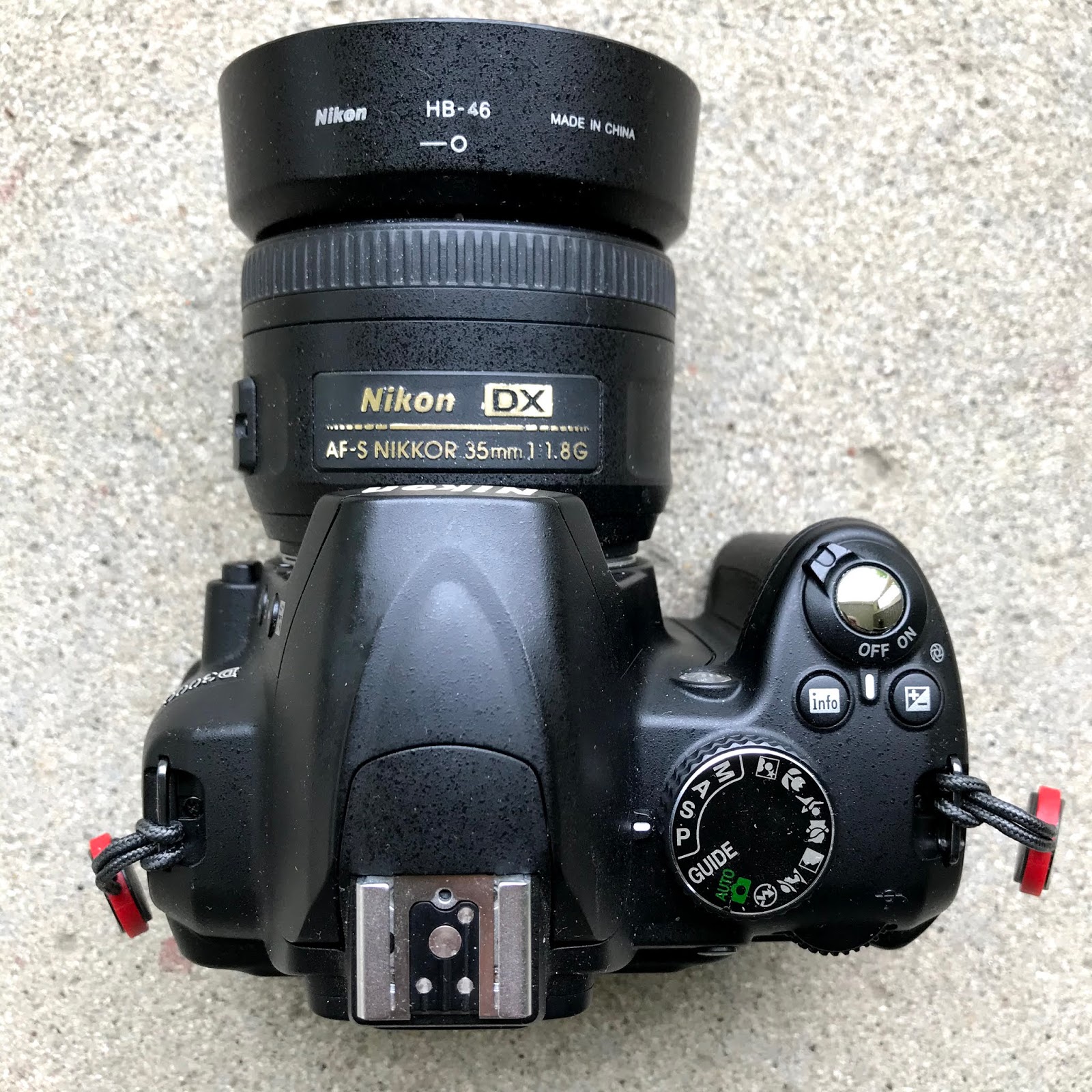
Nikon's excellent little 35mm f/1.8G is a great crop sensor prime, letting you isolate the subject and blue the background nicely.


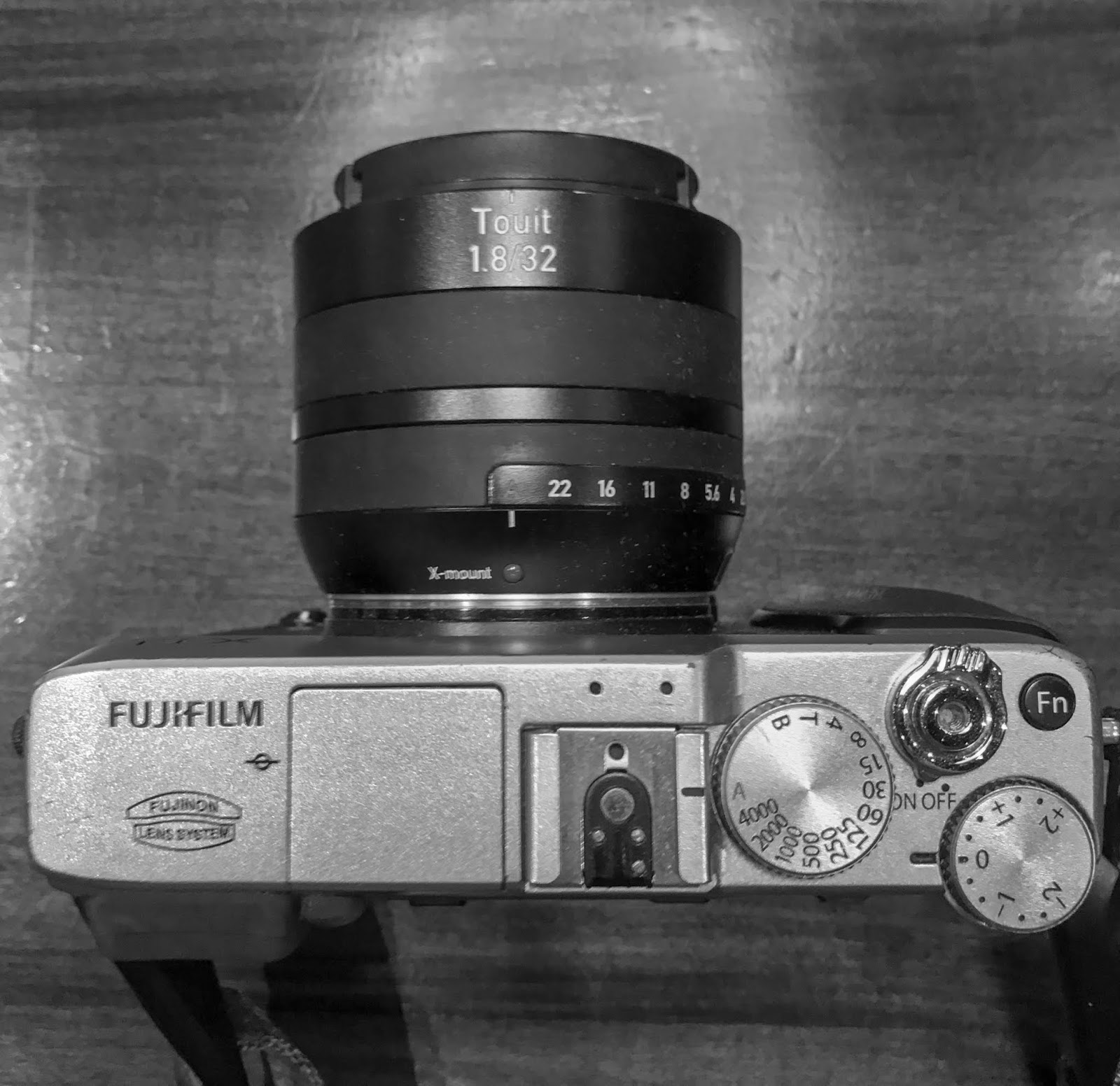
Fuji makes a few 35mm XF primes of varying prices and maximum apertures, but on my Fuji cameras I like the 32mm f/1.8 Zeiss Touit. If you really feel the need for speed on a budget, Sigma offers their 30mm f/1.4 Contemporary prime for the X-mount, too.


The Zeiss makes me happy...


Still, given the versatility of modern zoom lenses, I usually only break out the 50mm equivalent when I need the really fast aperture. They do see more use than my 35mm wide-ish angle primes, though.

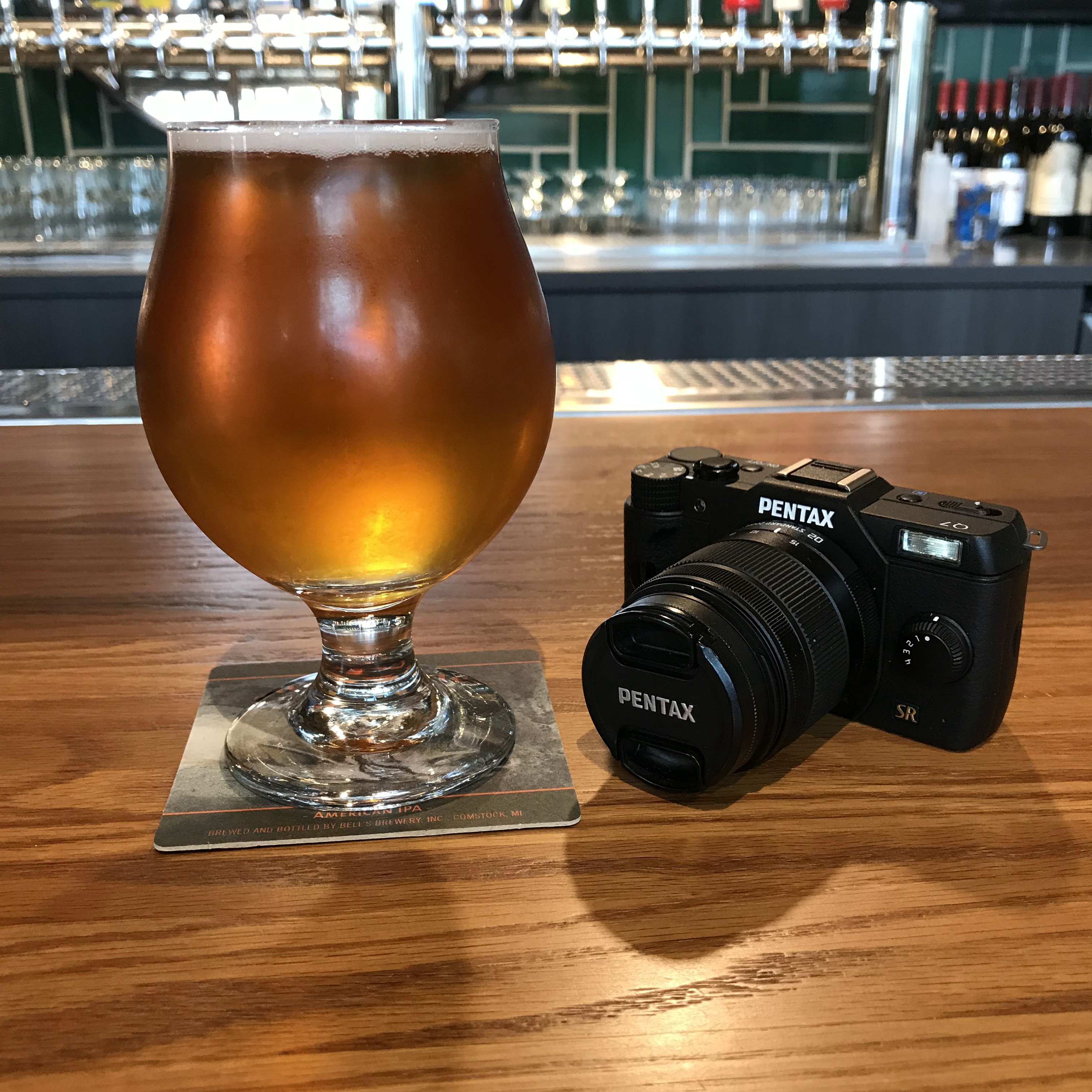
It comes in handy with cameras that aren't great in low light, like the small-sensor Pentax Q series, which has an 8.5mm f/1.9 prime that's a 50mm equivalent.


1.05.2024

The Pentax Q-S1: A Review

Pentax iterated its Q-series of tiny small-sensor mirrorless cameras extremely quickly. The original Pentax Q was announced in June of 2011, and a new replacement followed each subsequent year until August 2014's debut of the Q-S1, which wound up being the terminal Q.

Internally, the Q-S1 was functionally identical to the preceding year's Q7, right down to the 12MP 1/1.7" BSI CMOS sensor.

The external controls and software menus were unchanged since the original Q, so you can refer to my review of that camera for a rundown of the buttons.

What was different was the plastic external shell, which had a more "rangefinder-esque" shape, rather than the "mini DSLR" look of the Q10 and Q7.

Alas, this meant that the finger grip disappeared from the front of the body. Not a huge loss, since you can pinch the whole camera comfortably between thumb and forefinger and the body weighs a minuscule 7.16 ounces, but still...


That's my Q-S1 with a full kit of 01 Standard Prime, 02 Standard Zoom, 06 Telephoto Zoom, and the 03 Fisheye. The whole ensemble easily stows in the Think Tank Event Messenger 100, which will normally hold a regular DSLR wearing a travel zoom and maybe two smallish lenses. With the Q system, you could pack a light lunch in there along with the camera and all the lenses.

Indiana World War Memorial, 03 Fisheye lens at ISO 3200

It held the price line from the previous model with a $499 price tag, while still offering forty different color combinations.


The Q-S1 lingered in the Pentax catalog for years without a replacement being announced, so when it was discontinued in 2019, that was pretty much the end of the line for the Tiniest Interchangeable Lens Mirrorless.

.

12.28.2023

Mirrorless Pics: Huck the cat with the Pentax Q-S1


The Pentax Q-S1 that debuted in 2014 would turn out to be the final iteration of the Q series. It was basically a Q7 with the outer shell re-sculpted into more "Leica-rangefinder-esque" contours.

I was headed out the door yesterday with the Q-S1 & 8.5mm f/1.9 01 Standard Prime lens in my jacket pocket when I noticed Huck napping in the window seat looking adorable, so I snapped a couple photos.

The upper one is taking the .dng RAW file and running it through Photoshop's RAW convertor, and the lower one is a monochrome .jpeg straight out of the camera.


12.25.2023

The Pentax Q7: A Review

The summer of 2013 saw the third iteration of Pentax's Q-series of subcompact mirrorless interchangeable lens cameras. In the form of the Q7, the littlest MILC had arguably finally come of age.


Externally, the Q7 was identical to its predecessor, the Q10. It had the same "tiny SLR"-shaped polymer body shell and was available in black, classic panda, and the whole array of kawaii color combos that the Q10 came in.

From a controls standpoint, it was completely the same as both preceding models, so you can refer to my Pentax Q review for a rundown of the buttons and knobs.

The big change was an increase in sensor size from 1/2.3" to 1/1.7", while maintaining the same 12 megapixel resolution. The larger sensor was the size most commonly found in enthusiast compacts, and by spreading the same number of photosites over an area one and three quarters times the size, low light performance was increased while noise was reduced.

Interestingly, looking at the crop factors and the focal lengths of the lenses, one is forced to assume that Pentax had intended to use the bigger sensor all along. For instance, the 5-15mm standard zoom and 15-45mm telephoto have fields of view equivalent to 27.5-83mm and 83-249mm on the older cameras. On the new Q7 with its larger sensor, however, they are 23-69mm and 69-207mm. That's so close to the classic pairing of a 24-70 and 70-200 zoom as to make no nevermind.

Despite the larger sensor, the Q7 held the price point of the Q10, with an MSRP of $499, with the 02 kit zoom included.

2013 also saw two more additions to the Q-mount lens library: The adorable little 07 Mount Shield fixed focus 11.5mm f/9 lens which was basically a body cap with a lens element, and a new 08 Wide Zoom. The latter was a 3.8-5.9mm f/3.7-4 that gave a field of view equivalent to a 17.5-27mm lens on a 35mm camera.


All of the above photos were shot with the 5-15mm 02 Standard Zoom on my Q7. 

My Q7, as you can see in the photo that opens this post, is black and it came packaged with a matching black kit zoom. The only other Pentax Q lens you can get in black is the 01 Standard Prime, but they bring blood money on the 'Bay, so I've held off so far.

So far...

(If you want to play with a Pentax Q7, Roberts Camera here in Indy has a classic-looking black-on-silver "panda" Q7 with three matching lenses: 01 Standard Prime, 02 Standard Zoom, and 06 Telephoto Zoom for sale at the time this post was written. The whole shebang is $549.99. I have no affiliate relationship with them, but I'm a very satisfied frequent customer.)

.
Merry Christmas!

Pentax Q10 & 5-15mm f/2.8-4.5 02 Standard Zoom

Merry Christmas to all you folks out in Digital Fossils Land! Dust off an old camera and take some fun holiday snaps with it!

.

12.24.2023

Mirrorless Pics: Mustangs with the Pentax Q7


The Q7 was the third iteration of Pentax's subcompact mirrorless line, after the Q and Q10. It used a sensor with the same 12MP resolution as its predecessors. However rather than a 1/2.3" sensor like the previous cameras, the Q7 used a larger 1/1.7" backside-illuminated CMOS unit.

1/1.7" is the size that was most commonly used in higher-end enthusiast pocket cameras and boasts a surface area nearly 1.75 times greater than the smaller 1/2.3" sensor. All else being equal, the same number of photo sites on a larger chip will mean better low light performance and less noise at higher ISO numbers.


The Pacific Green SN95 Mustang GT convertible and Velocity Blue S550 Mustang GT were snapped using the 5-15mm f/2.8-4.5 02 Standard Zoom on the Q7.

.

12.18.2023

The Pentax Q10: A Review

Pentax’s original Q debuted to reviews that were equal parts enthusiastic and bemused. Back in 2011 nobody was really sure how the new field of mirrorless cameras was going to shake out. What, in effect, were these new cameras for?

The original Q offered a lot of “real camera” functionality, but its sensor size made it seem like a fun “play camera”. Its sturdy magnesium shell and eight hundred dollar price tag had it competing with established DSLR systems, but its lens selection was limited to the 01 Standard Prime and the 02 Standard Zoom and a handful of plasticky novelty lenses: the fixed focal length, fixed-aperture trio of the 03 Toy Fisheye, 04 Toy Lens Wide, and 05 Toy Lens Telephoto.

In 2012, Pentax leaned into the fun kawaii aspect of the tiny camera and replaced the Q with the Q10.

Pentax Q10, with Nikon D2X for scale.

While it also sports a 12MP 1/2.3" backside-illuminated CMOS sensor like its predecessor's, Pentax claims some hand-wave-y improvements, as well as faster autofocus. The most important change between the original Q and the Q10 was the price drop. Whereas the earlier camera had been $800 with a fixed-focal length prime lens, the new one was two hundred bucks cheaper and came with the 02 Standard Zoom in the kit.

It accomplished this by replacing the magnesium body of the Q with an entirely polymer outer shell. The new body had a slightly more sculpted top plate and a deeper finger grip that somehow gave it more SLR-like lines.

If you read my earlier review on the Q, all the buttons and controls are in the same place on the newer camera. However you could now get your kawaii little mirrorless Pentax with a hundred different combinations of body and grip colors. It's what attracted me to the camera in the first place; I thought it would be neat if Tamara Keel could get a camera, teal.

The other improvement to the Q lineup in 2012 was the addition of the 06 Telephoto Zoom, a 15-45mm f/2.8 zoom lens that had a field of view on the 1/2.3" sensor equivalent to an 83-249mm lens on a full frame camera...and yet it was about the size of a shot glass.

The Q10 is a fun little camera, and with the addition of the longer zoom, you could now have a reasonable three-lens kit: a standard zoom, a long zoom, and a fast standard prime. Within the limitations of the smaller sensor, the Q series had become a viable, if quirky, alternative to more normal entry-level DSLRs and mirrorless cams.

Q10 with 02 Standard Zoom

Q10 with 02 Standard Zoom, using "blur control" mode to simulate background blur

Q10 with 02 Standard Zoom


.

12.14.2023

Mirrorless Pics: Monochrome cars with the Pentax Q10


As I mentioned, I keep the little Pentax mirrorless cameras set to record both a RAW (.DNG) file as well as a high-res monochrome JPEG. This Maserati Quattroporte Q4 and Mercedes-Benz W213 E-class both look dramatic in monochrome (the Maserati was black and the Benz was silver) and were snapped using the 5-15mm f/2.8-4.5 02 Standard Zoom lens.


12.08.2023

The Pentax Q: A review.

The original Pentax Q, which debuted in the summer of 2011, was the most conventionally-styled of the Q-series cameras. It also featured the highest level of build quality.


Its sturdy magnesium shell was shaped sort of like a little rangefinder camera, albeit with a little hump just big enough to emblazon with the PENTAX name under the accessory shoe, where the viewfinder hump would be on an SLR-type camera. Despite that, there is no viewfinder, either electronic or optical; image composition must be done on the rear screen like with a point & shoot. Sacrifices must be made on a camera this small.

There's no sacrifice in the physical control department, however, unlike the early mirrorless efforts from Canon and Nikon.

Atop the camera at the front right-hand corner of the top plate is a prominent dial with the full array of PASM modes, as well as positions for Auto, Scene (the usual array of Portrait, Landscape, Action, Candlelight, etc. modes), Movie, and a setting called BC, which stands for "Blur Control" and will render some "fauxkeh" artificial background blur, with about as much sophistication as you could expect from a 2011 camera. The Blur Control setting allows shooting in JPEG only, obviously.

Immediately abaft of the mode dial is another control wheel, positioned at the right rear corner of the top plate where it can easily be twiddled by the thumb on the shooting hand. This controls the aperture or shutter speed in the appropriate mode, shifts the program in "P", and controls zoom when reviewing images in playback mode.


Immediately to the left of these dials are the shutter release and the tiny On/Off button, which is slightly recessed so as not to get jostled inadvertently. On the other side of the accessory shoe, on the left side of the top plate, are the playback button and the switch to pop the flash up. (And oh boy does the flash ever pop up, on a complex double-jointed arm that gives a surprising amount of offset from the lens axis.)

The back of the camera is pretty conventional mirrorless camera, albeit shrunk to fit. There's a bright 3" TFT LCD monitor with 460,000 pixel resolution taking up most of the real estate, while the right edge has the stack of little chiclet control buttons. On the front of the body are a focus assist lamp, lens release button, and a little dial that lets you select four user-definable presets.

The solidly-built metal-bodied original Q was a spendy little toy. Initial MSRP in 2011 was $800 with the 8.5mm f/1.9 kit lens, with the 5-15mm f/2.8-4.5 02 Standard Zoom available for another $299. That's the equivalent of $1100 and $400 in 2023 dollars. By way of comparison, the Canon Rebel T3i and Olympus PEN E-P3 were both priced at $899 with a kit zoom in camera stores at the time.

The Rebel T3i had an 18MP APS-C sensor and the Oly PEN E-P3 had a 12MP Four Thirds sensor, while the Pentax Q had a 12MP 1/2.3" BSI CMOS sensor, the size of ones most commonly found in point & shoot pocket cameras. It wasn't exactly a low-light beast, but between the reasonably fast lenses and Pentax's built-in Shake Reduction sensor-based image stabilization, it did okay.

The following shots were all taken with the 01 Standard Prime lens and shot in RAW (DNG) format, converted via Photoshop's built-in convertor.


12.07.2023

Mirrorless Pics: Around SoBro with the Pentax Q10

The 01 prime lens is fast enough, with its maximum f/1.9 aperture, to use indoors as long as it's not super dark. (Although the tiny sensor does get noisy fast at higher ISOs.)

The monochrome shots are straight-out-of-camera high res JPEGs, while the color pics are lightly-processed RAWs.


12.06.2023

Mini Mirrorless: The Pentax Q Series

Back at the dawn of the mirrorless age the cameras themselves took two different approaches. 

For Panasonic and Sony, who didn't have long photographic lineages, and Olympus, who had basically started over from scratch in the digital era, they quickly moved to become standard cameras; competitors (and eventual replacements) for the classic SLRs.

For Canon, Nikon, and Pentax, who were all invested in digital systems that had physical ties back to their film legacies, there was a struggle to find a niche for these new cameras that didn't take market share from their established DSLR lines.

Pentax's solution was to go back to an older camera of theirs for inspiration...


Pentax's mirrorless entrant used a tiny 12MP 1/2.3" sensor, the size usually associated with pocket point and shoot cameras. They boasted that the new Pentax Q was the smallest interchangeable lens system camera on the planet.

While the initial Q was magnesium-bodied and came in white and black, Pentax went full kawaii with the later plastic-bodied models... the Q10, Q7, and Q-S1 ...and made them available in every color of the rainbow.


Because of the tiny sensor, the lenses could be made commensurately smaller and lighter. In the photo below is a Pentax Q-S1 with normal prime, standard zoom, telephoto zoom, and fisheye lenses.


The body and all four lenses combined weigh only a hair over one pound!


I don't know which I like better, the cheerfully colored models, or my all-black Q7, which looks like a regular DSLR unless you have an object of a known size nearby to provide scale...


Over the next couple weeks I hope to do an in-depth look at each of the four models, as well as the lenses I have on hand.

.

12.04.2023

Mirrorless Pics: BMW 528e with the Pentax Q10


Out and about with the Pentax Q10 in my pocket yesterday, and the 528e was out in the rain, making an excellent subject.

The Q10 was the second iteration of the Q series of miniature mirrorless cameras from Pentax. It has a 1/2.3" 12MP sensor, like the original, with faster autofocus, and with a plastic body rather than the magnesium shell of the original Q.


12.01.2023

Mirrorless Pics: Olds 88 with the Pentax Q-S1


A 1994-'95 Oldsmobile Eighty Eight Royale, straight-out-of-camera monochrome JPEG with the Pentax Q-S1 and the 15-45mm f/2.8 telephoto zoom.

Since the shortest 15mm focal length gives the same field of view as a 70mm lens on a full-frame camera, this kinda limits the lens's usefulness as an all-purpose walking-around lens. If I were really committed to the Q system, I'd carry two bodies, the 01 Standard Prime, the 02 Standard Zoom, and the 06 Telephoto Zoom and swap lenses on the bodies as needed. I'd keep the 15-45/2.8 on one body and swap back and forth between the fast prime and kit zoom on the other based on whether I was indoors or outdoors.

.

11.30.2023

Mirrorless Pics: Red Squirrel with the Pentax Q-S1


Another local nature shot with the 06 Telephoto Zoom on the Pentax Q-S1. This one's 1/400th of a sec, wide open at f/2.8 at ISO 200. The in-body image stabilization ("SR" for "Shake Reduction" in Pentax-speak) worked dandily, which is unsurprising since Pentax was a pioneer in the field.

Wide open there's a bit of purple chromatic fringing around the edges, but it still delivers pretty sharp results in the center, especially considering the tiny size of the 1/1.7" 12MP sensor.

You can make out individual hairs on the squirrel quite easily. Not bad for a lens the size of a shot glass.

.

11.23.2023

Mirrorless Pics: Red-Tailed Hawk with the Pentax Q-S1


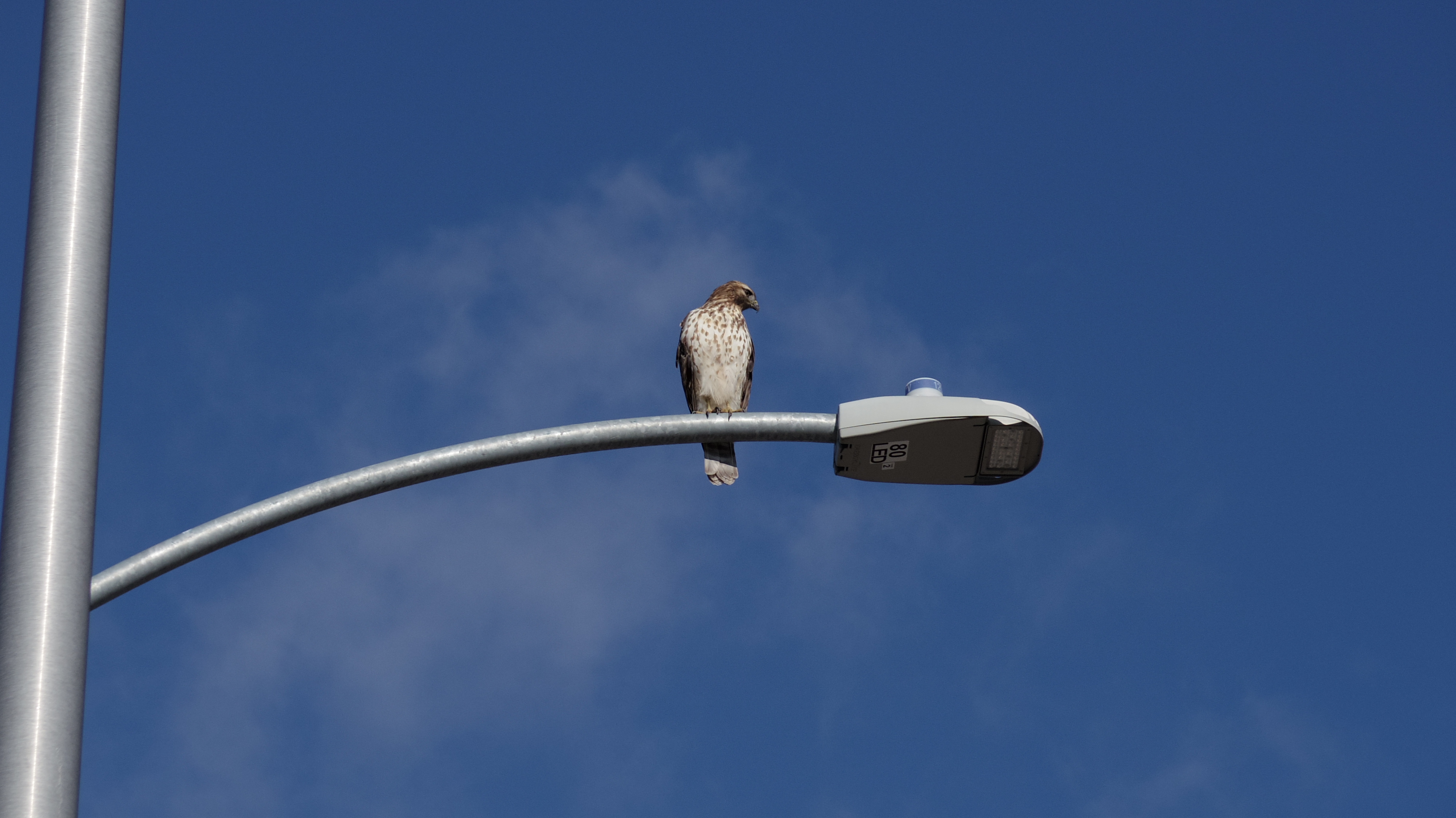
I happened to have the Pentax Q-S1 with the 15-45mm f/2.8 06 Telephoto Zoom on it in my jacket pocket yesterday when a red-tailed hawk alit on a street light right in front of me.

On the little 1/1.7" sensor, that lens is the equivalent of a 70-200mm on a full-frame.

The image above is lightly cropped. Un-cropped shots look like this.


EDIT: My birdwatching friend tells me this is probably a red-shouldered hawk.

11.07.2023

Mirrorless Pics: Around SoBro with the Pentax Q

The tiny little Pentax Q came out in 2011, touted as the smallest interchangeable lens system camera, and it is twee indeed. It vibes like an update of Pentax's old 110 SLR system.

Pentax Q with a Nikon D700 for scale.

The Q system numbers its lenses, and the first two released were the 01 Standard Prime, which is an 8.5mm f/1.9, and the 02 Standard Zoom, which is a 5-15mm f/2.8-4.5. Both lenses have built-in leaf shutters.

Constructed with a very solid-feeling aluminum body, the Q has a 1/2.3" sensor, of a size more commonly associated with pocket point & shoots and cell phone cams. Thanks to the tiny sensor's crop factor, that gives the 01 Prime the equivalent field of view to a 47mm lens on a full-frame camera, and the 02 Zoom a 28-83mm equivalent field of view.

Here's the SoBrosaurus at the widest angle with the 02 Zoom...


...and here it is zoomed in to the maximum 15mm:


These were both shot in RAW and just run through the Photoshop converter by poking the Lens Correction, Adobe Vivid, and Auto buttons.

Here are a couple more pictures from my walk yesterday, both using the 02 Standard Zoom lens:

SoBro apartment door

BMW X3 M4.0i


.