Showing posts with label Pentax. Show all posts

11.25.2025

Better, Yet Smaller: The Pentax K-7


In the summer of 2009, the K20D was supplanted at the top of Pentax's DSLR lineup by the new K-7. While it had an APS-C sensor with in-body Shake Reduction and a 14MP resolution just like its predecessor, the new camera was smaller and more rugged, with a magnesium body shell and better cold-weather resistance.

Top shutter speed bumped from 1/4000th to 1/8000th of a second, and it was rated for 100,000 activations.


Like before, there's "TAv" position on the mode dial. This allows you to set your preferred aperture and shutter speed and the camera will automatically adjust ISO to compensate. There's also the "Sv" mode to allow you to use the rear dial to adjust ISO on the fly. The other modes are the same as you'd expect. The top panel LCD can be briefly illuminated blue by rotating the power switch past the "ON" position.


Despite the K-7 being physically smaller than its predecessor, the rear LCD screen has grown from 2.7" on the K20D to a full 3" on the newer camera. This required relocating the vertical stack of buttons that used to live on the left side of the monitor. The relocation was done sensibly, with the playback-mode-only "Play" and "Trash" buttons moving to the upper left, and "Info" and "Menu" moving over to the right with the other menu navigation and activation buttons.

Despite all these improvements, MSRP for the K-7 was $1,150, which was over a hundred bucks cheaper than its forebear, and one of the best deals of the cameras in the category.


11.17.2025

DSLR Pics: Red cars with the Pentax K20D


It's not likely to blossom into real fandom for me, but having put in a fair amount of time with the K20D and the K7 now, I can see why Pentax has a loyal following. They're compact, rugged, and have sensible control layouts.


9.23.2025

DSLR Pics: Cars with the Pentax K7


I was having some early issues with the Pentax K7 and the picture not being composed the way I thought I saw it in the viewfinder. Getting a few frames ruined by thinking I was filling the frame, only to look at the RAW file and find one of the bumpers lopped off by the edge of the shot.


I know that, unlike its predecessor, the K20D, which had a viewfinder that only covered 95% of the image area, the K7 has a viewfinder with 100% coverage. I don't think that's the problem, though, as I use cameras with 100% finders fairly often and try and keep a reasonable border around cars to allow cropping and leveling if necessary.

Anyway, it bears investigating...


8.22.2025

Down the K-hole: Pentax K20D


The K20D was Pentax's second generation of semi-pro DSLR, replacing the K10D in January of 2008.

While its $1,300 MSRP put it head to head with Canon's EOS 40D, the price leader in the category, its Samsung-sourced 14.6 megapixel CMOS sensor offered almost half again the resolution, making it the highest-resolution APS-C camera on the market at the time (tied, of course, with its Samsung-badged clone, the GX-20.)

It was Pentax's top-of-the-line DSLR, but the line in question only consisted of the K20D and the cheaper, lower-resolution K200D.


The mode dial has the usual full-auto (green rectangle) and PASM modes, along with a couple unique-to-Pentax settings. The "TAv" position is "Shutter and Aperture Priority", where the user operates the front and rear dials to manually select the shutter speed and aperture size and the camera automatically adjusts the ISO to try and get the best exposure. "Sv" is "Sensitivity Priority" and functions like Program mode except the rear dial is used to set ISO on the fly, which is useful when operating in an environment where lighting conditions might vary wildly.


It's a physically small camera in the category; noticeably smaller than the Canon, Nikon, and Olympus entries and even slightly svelter than the Sony a700.

It's missing some typical buttons, such as ISO, instead using a combination of the "Fn" button and on-screen menus to select these settings.


The battery and memory card doors are securely latched and the whole camera feels quite rugged. With its 14.6MP sensor and an ISO range from 100 to 3200 (expandable to 6400), the K20D still holds up quite well today and nice used ones can be found for well under two hundo.


This is the first Pentax DSLR I've spent any real time with, and I can see why Pentax fans are so loyal. It's a solid, easy to use camera that's nice and compact.


8.16.2025

DSLR Pics: Draft Animals with the Pentax K20D


Here are a couple of photos from the Pioneer Village farming exhibition at the 2025 Indiana State Fair taken with the Pentax K20D and the DA 18-135mm f/3.5-5.6ED zoom lens.

The upper photo is a straight-out-of-camera JPEG while the lower two were processed from the original PEF (Pentax's RAW format) in Adobe Photoshop.


5.22.2025

Grip Gripe

If you're gonna build a grip into the body of your DSLR camera, like most every manufacturer does, I feel like it should be deep enough that I can let my arm hang by my side and the camera will dangle with just my fingertips in the grip, even with a fairly small lens on it. (If you've got some monster telephoto hanging off it, any camera will do that.)

With the small lenses that I have for it, the Pentax K20D will not do that. I has a sad.


5.18.2025

Dual slot? Maybe not!

The second on my list of "pro features" after dual control wheels was dual card slots, although in the year 2008, that was still generally found only on the top models of most lineups.

The 1D Mark III and 1Ds Mark III each had one Compact Flash and one SD card slot, but the contemporary 5D Mark II only had the CF slot. Similarly, Nikon's pro D3 had a brace of CF slots, but the D700 only had the one.

Stepping down from full frame to crop sensor, the Canon EOS 40D and Nikon D300 only had one CF slot. Likewise, the Pentax K20D, which was the top digital Pentax of the time, had a lone SD card slot for storage.

Only the Sony a700 and Olympus E-3 had a pair of card slots among the cameras in this tier, but that's for a specific reason. See, both Sony and Olympus had their own in-house memory card formats, so their DSLRs had one slot for Compact Flash and one for Sony Memory Stick (on the a700) or xD (on the E-3).

The card slots on an Olympus E-3

Unlike the dual slots on the pro Nikon and Canon cameras, you couldn't record to both of these cards at the same time, it was strictly one or the other.

It wouldn't be until later, in cameras like the Nikon D300S and D7000 that Nikon let dual card slots trickle down, and Canon users had to wait for the 5D Mark III and 7D Mark II.

5.11.2025

DSLR Pics: Cars with the Pentax K20D


So I had the Pentax K20D out for its inaugural outing of car-spotting, even though the DA 16-45mm f/4 lens is a little short for the task, being a rough equivalent of a 24-70mm lens on a full-frame body.

The Samsung-made 14.6 megapixel CMOS sensor gives a little leeway for cropping if necessary, so it wasn't that much of a hindrance. Pentax has an 18-135mm f/3.5-5.6 zoom that was shipped as a kit lens with some of their nicer crop sensor DSLRs and is therefore available for a song on the used market. I might pick one up for comparison purposes.


These were shot in RAW and run through a quick auto JPEG conversion in Photoshop.


5.10.2025

Retro Shootout?

Remember how I was talking about the "prosumer" grade crop sensor cameras the other day? In the 2007-2009 period, that would have meant the Nikon D300, the Canon EOS 40D, and the Olympus E-3. It also would have included the Pentax K20D, which had full weather seals and a plastic shell enclosing a rugged metal chassis.

I don't have a D300 anymore, having traded it in on a D300S, which is basically the same thing, but with dual card slots and video, but I do have a 40D and an E-3.

Hey, you know what you can get really cheap on the used market these days?

A Pentax K20D with a 16-45mm f/4 zoom lens

That DA 16-45mm F4 ED AL lens came out in 2003 and was one of Pentax's first digital-specific zoom lenses and, like the camera itself is available for a song because there are newer and cooler alternatives. Altogether the whole setup was a couple hundo at Used Photo Pro.

11.04.2024

Lenses I Live By: 50mm

The basic building block of any lens kit is, or at least used to be, the fast normal prime. In full frame terms, that's generally a 50mm lens with a maximum aperture of f/1.8 or faster. I have something like this for just about every system I use.


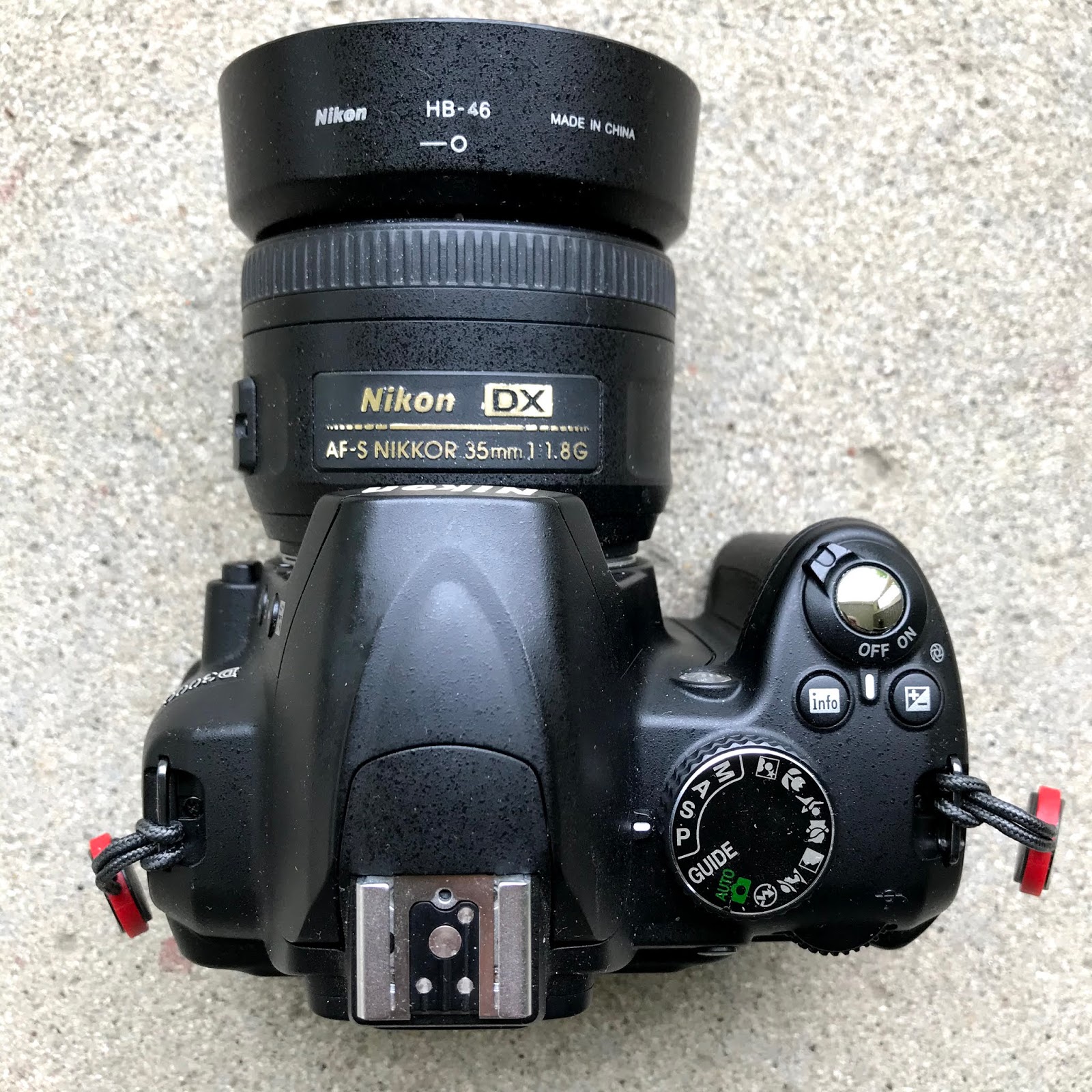
Nikon's excellent little 35mm f/1.8G is a great crop sensor prime, letting you isolate the subject and blue the background nicely.


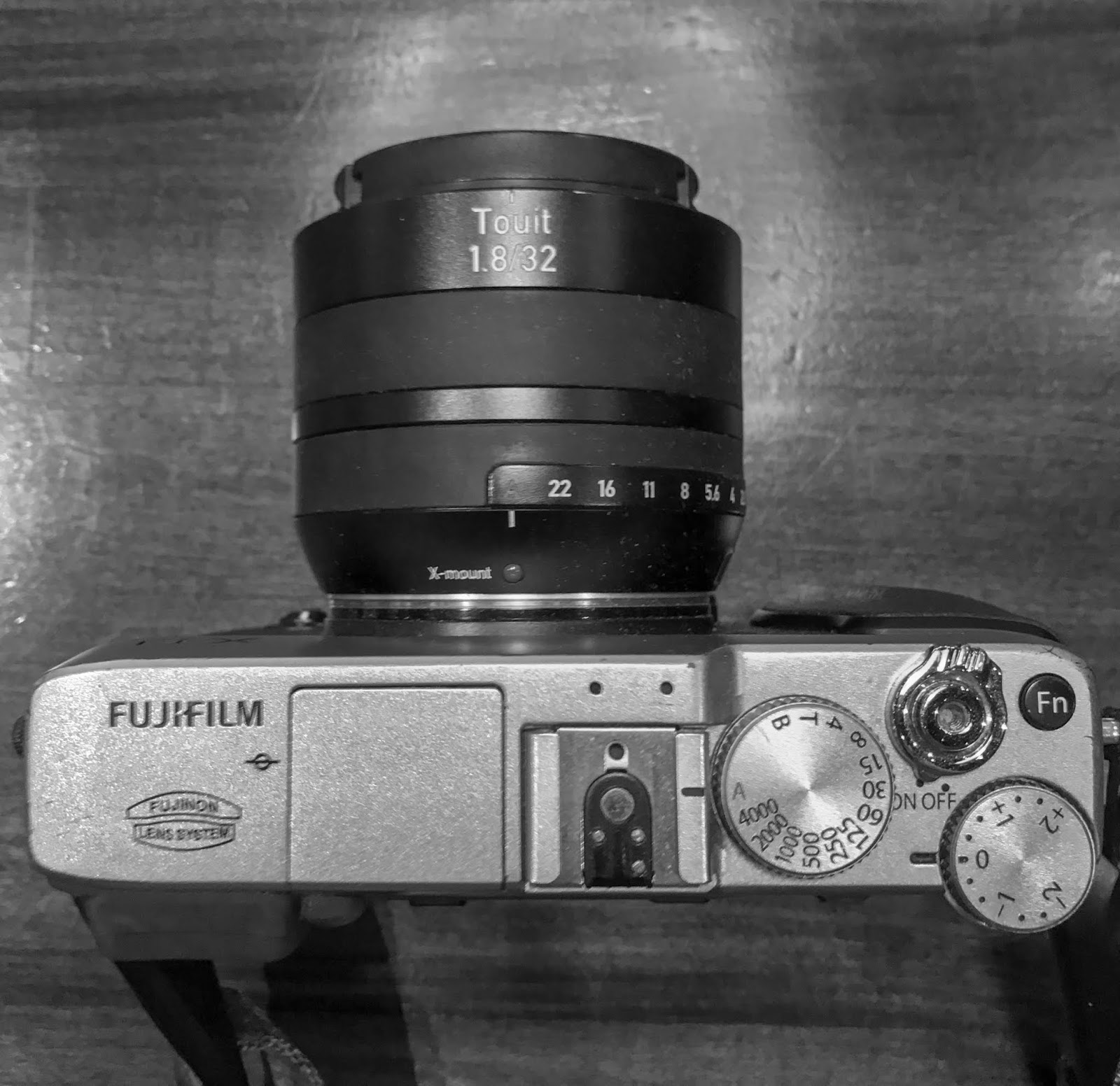
Fuji makes a few 35mm XF primes of varying prices and maximum apertures, but on my Fuji cameras I like the 32mm f/1.8 Zeiss Touit. If you really feel the need for speed on a budget, Sigma offers their 30mm f/1.4 Contemporary prime for the X-mount, too.


The Zeiss makes me happy...


Still, given the versatility of modern zoom lenses, I usually only break out the 50mm equivalent when I need the really fast aperture. They do see more use than my 35mm wide-ish angle primes, though.

It comes in handy with cameras that aren't great in low light, like the small-sensor Pentax Q series, which has an 8.5mm f/1.9 prime that's a 50mm equivalent.


1.05.2024

The Pentax Q-S1: A Review

Pentax iterated its Q-series of tiny small-sensor mirrorless cameras extremely quickly. The original Pentax Q was announced in June of 2011, and a new replacement followed each subsequent year until August 2014's debut of the Q-S1, which wound up being the terminal Q.

Internally, the Q-S1 was functionally identical to the preceding year's Q7, right down to the 12MP 1/1.7" BSI CMOS sensor.

The external controls and software menus were unchanged since the original Q, so you can refer to my review of that camera for a rundown of the buttons.

What was different was the plastic external shell, which had a more "rangefinder-esque" shape, rather than the "mini DSLR" look of the Q10 and Q7.

Alas, this meant that the finger grip disappeared from the front of the body. Not a huge loss, since you can pinch the whole camera comfortably between thumb and forefinger and the body weighs a minuscule 7.16 ounces, but still...


That's my Q-S1 with a full kit of 01 Standard Prime, 02 Standard Zoom, 06 Telephoto Zoom, and the 03 Fisheye. The whole ensemble easily stows in the Think Tank Event Messenger 100, which will normally hold a regular DSLR wearing a travel zoom and maybe two smallish lenses. With the Q system, you could pack a light lunch in there along with the camera and all the lenses.

Indiana World War Memorial, 03 Fisheye lens at ISO 3200

It held the price line from the previous model with a $499 price tag, while still offering forty different color combinations.


The Q-S1 lingered in the Pentax catalog for years without a replacement being announced, so when it was discontinued in 2019, that was pretty much the end of the line for the Tiniest Interchangeable Lens Mirrorless.

.

12.28.2023

Mirrorless Pics: Huck the cat with the Pentax Q-S1


The Pentax Q-S1 that debuted in 2014 would turn out to be the final iteration of the Q series. It was basically a Q7 with the outer shell re-sculpted into more "Leica-rangefinder-esque" contours.

I was headed out the door yesterday with the Q-S1 & 8.5mm f/1.9 01 Standard Prime lens in my jacket pocket when I noticed Huck napping in the window seat looking adorable, so I snapped a couple photos.

The upper one is taking the .dng RAW file and running it through Photoshop's RAW convertor, and the lower one is a monochrome .jpeg straight out of the camera.


12.25.2023

The Pentax Q7: A Review

The summer of 2013 saw the third iteration of Pentax's Q-series of subcompact mirrorless interchangeable lens cameras. In the form of the Q7, the littlest MILC had arguably finally come of age.


Externally, the Q7 was identical to its predecessor, the Q10. It had the same "tiny SLR"-shaped polymer body shell and was available in black, classic panda, and the whole array of kawaii color combos that the Q10 came in.

From a controls standpoint, it was completely the same as both preceding models, so you can refer to my Pentax Q review for a rundown of the buttons and knobs.

The big change was an increase in sensor size from 1/2.3" to 1/1.7", while maintaining the same 12 megapixel resolution. The larger sensor was the size most commonly found in enthusiast compacts, and by spreading the same number of photosites over an area one and three quarters times the size, low light performance was increased while noise was reduced.

Interestingly, looking at the crop factors and the focal lengths of the lenses, one is forced to assume that Pentax had intended to use the bigger sensor all along. For instance, the 5-15mm standard zoom and 15-45mm telephoto have fields of view equivalent to 27.5-83mm and 83-249mm on the older cameras. On the new Q7 with its larger sensor, however, they are 23-69mm and 69-207mm. That's so close to the classic pairing of a 24-70 and 70-200 zoom as to make no nevermind.

Despite the larger sensor, the Q7 held the price point of the Q10, with an MSRP of $499, with the 02 kit zoom included.

2013 also saw two more additions to the Q-mount lens library: The adorable little 07 Mount Shield fixed focus 11.5mm f/9 lens which was basically a body cap with a lens element, and a new 08 Wide Zoom. The latter was a 3.8-5.9mm f/3.7-4 that gave a field of view equivalent to a 17.5-27mm lens on a 35mm camera.


All of the above photos were shot with the 5-15mm 02 Standard Zoom on my Q7. 

My Q7, as you can see in the photo that opens this post, is black and it came packaged with a matching black kit zoom. The only other Pentax Q lens you can get in black is the 01 Standard Prime, but they bring blood money on the 'Bay, so I've held off so far.

So far...

(If you want to play with a Pentax Q7, Roberts Camera here in Indy has a classic-looking black-on-silver "panda" Q7 with three matching lenses: 01 Standard Prime, 02 Standard Zoom, and 06 Telephoto Zoom for sale at the time this post was written. The whole shebang is $549.99. I have no affiliate relationship with them, but I'm a very satisfied frequent customer.)

.

Merry Christmas!

Pentax Q10 & 5-15mm f/2.8-4.5 02 Standard Zoom

Merry Christmas to all you folks out in Digital Fossils Land! Dust off an old camera and take some fun holiday snaps with it!

.

12.24.2023

Mirrorless Pics: Mustangs with the Pentax Q7


The Q7 was the third iteration of Pentax's subcompact mirrorless line, after the Q and Q10. It used a sensor with the same 12MP resolution as its predecessors. However rather than a 1/2.3" sensor like the previous cameras, the Q7 used a larger 1/1.7" backside-illuminated CMOS unit.

1/1.7" is the size that was most commonly used in higher-end enthusiast pocket cameras and boasts a surface area nearly 1.75 times greater than the smaller 1/2.3" sensor. All else being equal, the same number of photo sites on a larger chip will mean better low light performance and less noise at higher ISO numbers.


The Pacific Green SN95 Mustang GT convertible and Velocity Blue S550 Mustang GT were snapped using the 5-15mm f/2.8-4.5 02 Standard Zoom on the Q7.

.