Showing posts with label Canon. Show all posts

5.11.2026

Fossilized!

When I bought the Canon EOS 5Ds as an open box item back in 2019, it was the most I'd paid for a camera to that date. I think it may still hold that title.


Yesterday I thought "Y'know, I haven't actually used the 5Ds in a while." Even though it’s one of my newest, nicest cameras and technically my main work camera, I hadn’t shot it since… [checks most recent picture on card] …Jesus, TacCon ‘24. 

 I fell hard down the Micro 4/3 hole for pretty much all of 2025.

Jeez, I don’t own a single interchangeable lens camera… or any camera, really …made in this decade.

The E-M1X and EOS R are my newest cameras, followed by the X-T2 and then the 5Ds, and I just realized that, having been introduced in 2015, the 5Ds is technically old enough for the ten-year cutoff of blog!.

10.29.2025

DSLR Pics: Doggos with the Canon EOS 7D


The Canon EOS 7D was a big hit and stayed in production for what felt like an eternity at the height of the DSLR wars, staying in the catalog for half a decade before getting replaced by the 7D Mark II.

It's still a capable camera to this day, eleven years after it was discontinued.


9.21.2025

Mirrorless Pics: Vintage BSA with the Canon EOS M6


I really liked the EOS M6, but the system was snakebit from the start with its unique mount and inability to be adapted to full-frame mirrorless, which was obviously the wave of the future once Sony's marketing machine got cranked up.


The panda-colored M6 had good looks, but no EVF and, despite having normal camera-type controls (unlike the original M), it was tough to figure out what kind of camera it was trying to be.


8.16.2025

Semi-Tough: Canon EOS 40D

Of the high-end “prosumer” DSLR bodies that hit the market during 2007-2008, the Canon EOS 40D had the most aggressive pricing…by a whole dollar.

When it was released in late August of '07, Canon had yet to slice the DSLR market as finely as they did in later years. There were the 1D and 5D professional cameras, but lower on the totem pole there was only the plastic-bodied entry-level EOS Rebel XTi, and the 40D, successor to the earlier 30D.

This meant that the $1,299 Canon EOS 40D had to cater to every buyer from well-heeled novices who were too cool for a Rebel to advanced amateurs and professionals who couldn't justify the $3,000+ tariff demanded for the full-frame 5D.

This made for a mode dial that was a little... crowded.


You had your "Green Rectangle" setting, which turned the camera into a fully-automated giant point-'n'-shoot. For the advanced amateur or pro, there was your regular array of "PASM" modes (as well as "A-DEP", which adjusted the aperture to ensure that all subjects covered by the active focusing points were inside the depth of field), and the user-programmable C1-through-C3 custom settings. Finally, for beginners there was the selection of Sports, Portrait, Landscape, et cetera modes. All in all, this sums up to fifteen possible settings on the mode dial. Yikes!


The LCD panel on top gave you pretty much all the setting info you needed to drive the camera and could be backlit orange for easy reading in dim lighting.


The 40D was a pretty iterative update of the earlier 30D. On the back, the LCD was now a larger 3" screen, up from its predecessor's 2.5" unit, necessitating the relocation of of the buttons from a vertical column to the left of the screen to a horizontal row under it.

Under the hood, the APS-C sized CMOS sensor went from 8.2 to 10.1 megapixels and the 40D got Canon's new DIGIC III image processor, the second camera after the 1D to do so.

Despite being well-received and earning the "Highly Recommended" rating from DPReview, the 40D was one of the shortest-lived prosumer Canons, getting replaced after only a year by the 15MP EOS 50D.

Nowadays you can pick up used 40D bodies for a c-note or less, but they still work great.


7.22.2025

Not a Fossil...Yet

Mazda RX-7 Turbo II, Canon EOS R, EF 24-105mm f/4L IS

On the one hand, the Canon EOS R is the second most modern camera I own. Only the Olympus OM-D E-M1X is newer.

On the other hand, the R was Canon's first full-frame mirrorless effort and was released back in October of 2018, which seems a lifetime ago. My rough cutoff for something qualifying as a "fossil" on this blog is being ten years old or more, and the EOS R is heading that way fast.

Still, it's one of the most affordable ways to get into full-frame mirrorless.

6.10.2025

Singin' in the Rain

After the LCD display on the top panel, the next two pro camera features I mentioned in my list were a rugged, usually metal body, and weather sealing.

When normal folks would buy that boxed Nikon D3000 or Canon Rebel kit from Walmart or Best Buy, it represented a chunk of change. Especially back in the late '00s, when their only other experience with digital cameras had been a $150-$250 point-'n'-shoot, that $500 to $1000 DSLR kit that they purchased to document their big trip to Europe or their kid's first season of Little League was a luxury item and tended to be treated as such.

On the other hand, working photogs... especially photojournalists, wildlife and sports photographers, et cetera ...treated their cameras like the working tools they were. The body needed to be rugged enough to take a beating, and the weather sealing had to be up to shrugging off the elements.

I stumbled on a leaf-covered sidewalk and faceplanted right on top of this Canon EOS-1D Mark IV

If a camera will stand up to the sidelines of an NFL game or deal with a NatGeo expedition into the Amazon, I figure it's more than up to wandering around my Broad Ripple neighborhood.


I'll note that this is all for naught if not paired with a comparable lens. The Olympus E-5 and the Zuiko Digital 14-35mm f/2 Pro lens are both known for being quite weather-resistant.

6.09.2025

DSLR Pics: Vintage Triumphs with the Canon EOS 40D

I was getting lunch at Fat Dan's the other day when a gaggle of Triumph motorcycles pulled up over at Yat's, so I ambled over for a closer look.


The 40D was wearing the excellent EF-S 17-55mm f/2.8 IS zoom lens, which is probably the best glass Canon made for their crop-sensor DSLRs.


I'd been shooting moving cars and the camera was set to Program Mode with the ISO set to 200 despite the fact that it was a sunny day, in order to keep shutter speeds reasonably quick.


Between the good glass and the 10MP CMOS APS-C sensor, the photos are pretty reasonably detailed.

6.03.2025

DSLR Pics: Squirrel snapshots with the Canon EOS Rebel T1i


These were taken with the Canon Rebel T1i and an EF 28-200mm f/3.5-5.6 zoom lens while walking to lunch back in February of 2019.


The lack of image stabilization on the lens and the overcast day meant having to shoot close to wide open, even with all the reflected sky light coming off the snow acting as a sort of bounce fill.


The character of the bokeh on this isn't exactly what I'd call smooth and creamy, but it's not as jarring as the stuff that occasionally comes from its 28-200mm f/3.5-5.6G Nikon equivalent.

5.18.2025

Dual slot? Maybe not!

The second on my list of "pro features" after dual control wheels was dual card slots, although in the year 2008, that was still generally found only on the top models of most lineups.

The 1D Mark III and 1Ds Mark III each had one Compact Flash and one SD card slot, but the contemporary 5D Mark II only had the CF slot. Similarly, Nikon's pro D3 had a brace of CF slots, but the D700 only had the one.

Stepping down from full frame to crop sensor, the Canon EOS 40D and Nikon D300 only had one CF slot. Likewise, the Pentax K20D, which was the top digital Pentax of the time, had a lone SD card slot for storage.

Only the Sony a700 and Olympus E-3 had a pair of card slots among the cameras in this tier, but that's for a specific reason. See, both Sony and Olympus had their own in-house memory card formats, so their DSLRs had one slot for Compact Flash and one for Sony Memory Stick (on the a700) or xD (on the E-3).

The card slots on an Olympus E-3

Unlike the dual slots on the pro Nikon and Canon cameras, you couldn't record to both of these cards at the same time, it was strictly one or the other.

It wouldn't be until later, in cameras like the Nikon D300S and D7000 that Nikon let dual card slots trickle down, and Canon users had to wait for the 5D Mark III and 7D Mark II.

5.12.2025

What is "Pro"? What isn't?

What is a "pro" camera? The flippant answer would be "any camera that takes pictures which are then sold for money", of course.

As a marketing term, in the DSLR era the "pro" camera body was used to signify the big cameras with tough, weather-sealed bodies, built-in vertical grips and enormous batteries that were marketed to working photojournalists.

At the other end were consumer grade cameras that put more emphasis on affordability and ease of use than ruggedness, a full feature set, and cutting edge specifications.

In between these two...but closer to the former than the latter...are those "prosumer" bodies I was talking about the other day.

What are their defining features? If I had to make a list...
  • Dual control wheels, so that in Manual mode you have one for aperture and one for shutter speed.
  • Dual card slots (although not always)
  • An LCD readout on the top panel (although not always)
  • Rugged, usually metal, body
  • Weather sealing
  • A pentaprism, rather than pentamirror, viewfinder
What they don't have is a built-in grip, and they usually lack the latest and greatest technology that the pro bodies have. Historically they had more cost-conscious crop sensors.

Canon's 7D is practically the type specimen.


5.06.2025

The Sweet Spot DSLRs...

Back in the 2000s, when full-frame sensors and all the various tech that was packed into full-house pro bodies from Canon and Nikon made them eye-wateringly expensive, both manufacturers produced a line of cameras that used rugged and weather-sealed bodies combined with APS-C crop sensors and a slightly less-than cutting edge feature set.

They wound up getting called "prosumer" bodies, but cameras like the Nikon D200 or the Canon EOS 40D were as often as not used by professional photogs and serious amateurs who did photography as side gig and couldn't justify a $4,000-$5,000 pro body.

A Nikon D200 with battery grip mounted.

As sensor prices dropped and the full-frame craze spread, these cameras kind of lost their niche.

Starting with the EOS 60D, Canon's two-digit crop sensor cameras lost their metal body shells and weather sealing, with the pro-grade crop sensor torch getting passed to the then-new 7D, whose single-digit moniker made no bones about its target market.

Nikon let the D300S linger unchanged for years and actually abandoned the category for a while until the D500 debuted in 2016. 

I really like these on the used market because they're great values and built like tanks.

4.29.2025

Lenses I Live By: The Short Portrait

Portrait lenses tend to be longer than standard primes, since this allows taking photos without having to be all up in the subject’s grille, as well as exaggerating the effects of focal length compression to not cause the subject’s features to look distorted.

The “short” portrait focal length range, in my own personal lexicon, runs from about 75mm to 105mm, in full-frame terms. (I use “full-frame terms” because the 35mm format spent something like fifty years establishing itself as the lingua franca of normie photography jargon.) 

Most of the camera systems I use have a lens that falls into this category. For instance, the Nikon 1 system, with its little 1" CX-format sensor, has the 1 Nikkor 32mm f/1.2, which has the equivalent focal length of 87mm.

Nikon 1 V2 & 1 Nikkor 32mm f/1.2

Moving up to Micro Four Thirds, there are some pretty slick choices. Panasonic goes with 42.5mm focal lengths, which is an 85mm equivalent, in an inexpensive f/1.7 version and a bucks-up Leica Nocticron-branded f/1.2. Olympus, on the other hand, favors the 90mm equivalent 45mm focal length. They, too, offer a spendy f/1.2 PRO lens, but the M. Zuiko Digital 45mm f/1.8 is so compact, light, and inexpensive that it's the one I choose.

Things are similar with the Fujifilm X-mount ecosystem. There's a honking big 56mm f/1.2 portrait lens, but again, the bargain is the XF 50mm R WR "Fujicron", for its compact size and value pricing.

Fujifilm X-T2 & XF 50mm f/2 R WR

For my full-frame Canon DSLRs, I count on the EF 85mm f/1.8 for this task.

Canon EOS 5DS & EF 85mm f/1.8


1.08.2025

DSLR Pics: Random shots with the Canon EOS 40D

A liter-sized glass beer mug from Half Liter BBQ in SoBro, Indianapolis.


A happy pooch on the patio of Twenty Tap in SoBro, Indianapolis.


Tulips in SoBro, Indianapolis.


 A Volkswagen New Beetle in the parking lot at the grocery store.

9.22.2024

Baby Steps

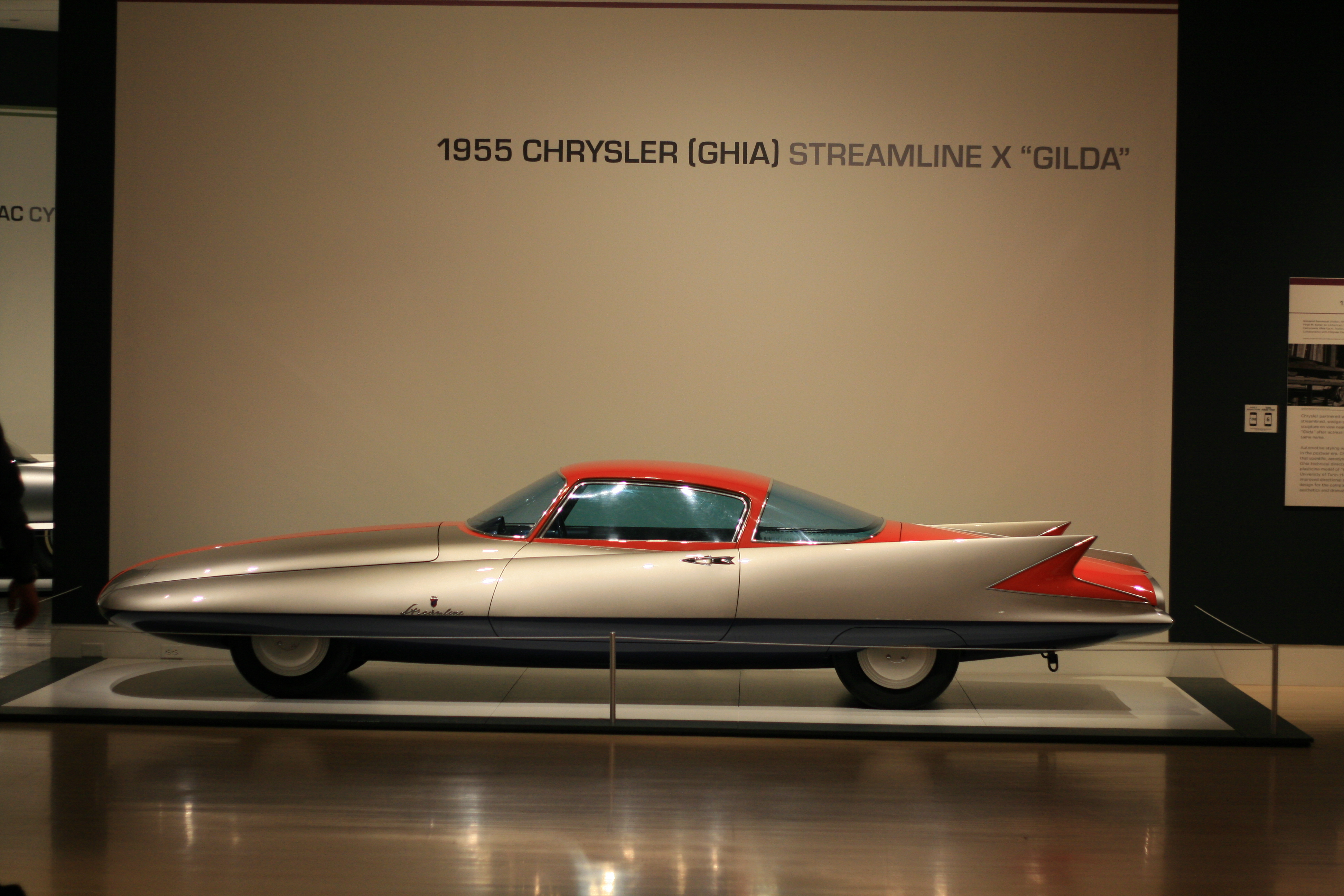
Back in 2015, Bobbi and I went to the Indianapolis Museum of Art (I refuse to call it "Newfields", no matter what the current signage reads) to see the touring "Dream Cars" exhibit.

I brought along a few cameras. Two were SLRs, a Canon EOS 10S, wearing an EF 35-135mm f/3.5-4.5 zoom lens and loaded with Ilford Delta 3200, and the other was an EOS Rebel XTi wearing the EF 50mm f/1.8 "Nifty Fifty". There was also the Nikon Coolpix P7000 I carried in my pocket all the time.

Thing was, I still had a lot to learn (and also re-learn) about photography. For instance, all my SLR experience before I bought the Rebel had been back in the film days, so I didn't know anything about crop factor. I slapped the 50mm on there because of the fast aperture, but the APS-C sensor on the Rebel made it effectively an 80mm lens. It was unstabilized, the fairly primitive sensor in the XTi struggled in low light, and I had way too long of a lens for shooting in the tight indoor quarters of a museum.


Meanwhile, even with the high speed B&W Ilford film in the EOS 10S, the unstabilized kit lens really struggled with the lighting.


The only camera that I got any really decent results with was the Coolpix, which had a fast, stabilized zoom lens, and which I put in Program mode at ISO 400 and just let 'er rip.


Not only was the gear primitive and my lens choices questionable, but I was shooting SOOC jpegs and my metering bag of tricks had, like, only two tricks in it.

Given what I had available at the time, I'd have been better off with the unstabilized 50mm on the film camera and just going with the stabilized EF-S 18-135mm travel zoom on the Rebel.

I would love to go back in time with my Fuji X-T2 or Nikon D800...

3.17.2024

DSLR Pics: 1952 Chevy truck with the Canon EOS-1D Mark III


This photo was shot with the handy EF 24-105mm f/4L IS general purpose zoom lens mounted on the Canon EOS-1D Mark III.

It was shot in RAW and processed through Adobe Photoshop's RAW converter using the "B&W with red filter" setting.

Like I usually do, I have the 1D Mk3 set up to record both a RAW file and a high res monochrome JPEG. Even though I (almost) never use the straight-out-of-camera JPEG, this ensures that the image shown on the back of the camera is in monochrome and helps me keep my head in that B&W mode, looking for light, shadow, and texture rather than colors.

.

3.12.2024

DSLR Pics: Holden with the Canon EOS-1D Mark IV


It was a gorgeous day on Sunday, sunny but cool, and I figured it would be a primo day to get some squirrel photos on the way to and from lunch.

So I grabbed the EOS-1D Mark IV and EF 70-200mm f/4L IS combo, which is pretty much my favorite squirrel-spotting rig. On the way out the door I noticed Holden lounging in his perch atop the cat tree in the living room, which puts him at roughly eye-level. The bright March sunlight filtering through the drapes made the shot irresistible, so I put the camera in Aperture priority mode, opened the lens wide, bumped the ISO to 3200 and (with help from Bobbi to get the lad to look around some) started snapping.

The bottom photo is processed from the RAW and the top is a SOOC monochrome JPEG. 


On the way to lunch I didn't see many squirrels. I guess when you're arboreal you don't venture out of your drey much when the branches are waving in a 10-15mph breeze.

I did, however, see this Eastern cottontail doe...


3.01.2024

High ISO

Canon EOS-1D MkIII & 24-105mm f/4L IS, ISO 3200

While the Nikon D1X could go up to ISO 800 and the Canon EOS-1Ds Mark II went all the way to 1600, I was leery of using either one at more than ISO 400 for fear of unusable amounts of noise.

It wasn't until 2007, with the release of the Canon EOS-1D Mark III and the Nikon D3 that 1600 and 3200 became practical settings, at least in my opinion.

This seems impossibly quaint here in 2024, when I'm seeing friends posting images from Canon R6's and Nikon Z7 II's at five-digit ISOs with no really noticeable noise, but it was a big deal back then.

Nikon D3 & 24-120mm f/4G VR, ISO 1600


2.29.2024

Canon EOS-1D Mk III: The Need for Speed

One of the problems with early DSLRs, especially when shooting in RAW, was the time it took to record image files to the storage device.

Back in 2001, the Nikon high-res D1X pro body would shoot at 3 frames per second, but it filled the buffer with only six RAW (or NEF, in Nikon-speak) frames. A couple years later, the consumer-grade Canon EOS Digital Rebel could nearly equal that frame rate at 2.5 FPS, although it filled its buffer in only four shots and then required a full "five Mississippi" count until the buffer was cleared.

The big revolutionary breakthrough was the Canon EOS-1D Mark III. Released in 2007, it came with a pair of Canon's DIGIC III image processing chips (as opposed to the lone chip found on lesser Canons) and these worked in parallel to allow not only a blistering 10 frames per second max speed, but it took a full thirty RAW files before the buffer finally tapped out and needed time to catch up. If you just wanted to shoot JPEGs, you could hold the shutter button down for a full eleven seconds before the buffer needed a breather. This was a 20% increase in frame rate and a 50% increase in buffer capacity relative to the 1D Mark II it replaced.

The sound of a mirror and shutter working at ten frames a second is noticeable. It was pushing the limits for the DSLR at the time and wasn't appreciably surpassed until the 14FPS EOS-1D X of 2011.


2.21.2024

DSLR Pics: Neighborhood people with the Canon EOS 7D


The EOS 7D was something new for Canon. When it was released in 2009, it didn't replace the then-current EOS 50D, but rather it slid into an entirely new niche above it.

Up to that point, the two-digit EOS bodies had occupied an unusual spot in Canon's marketing strategy. Because of the high cost of the pro-oriented 5D and 1D bodies, the two-digit line had to serve two audiences: Enthusiasts who wanted a feature-laden camera, as well as pros on a tight budget.

So they were rugged metal-bodied cameras, fairly weather resistant, but also had the various "Basic Zone" modes like Sports, Portrait, Landscape, et cetera, that are beloved by more casual users.


When the 7D appeared, it was essentially a pro-grade 5D Mark II body, but with an 18MP APS-C sensor in place of the 21MP full frame unit. Gone were the Basic Mode settings, replaced by a battery of user-programmable presets.

Over time, the two-digit line lost its metal body and weather-sealing while the 7D and later 7D Mark II carried the torch as crop-sensor pro bodies, popular with airshow and wildlife photographers for their frame rate and the effective 1.6X focal length bump they gave Canon's big telephotos.

The pictures above were shot with an EOS 7D and Canon's excellent EF-S 17-55mm f/2.8 IS USM zoom lens, which is an "L" lens in all but name. They're straight-out-of-camera monochrome JPEGs.

The 7D remained in the catalog nearly five years before being superseded by the Mark II version and used ones today can be found for well under two hundred dollars, which is an incredible amount of bang for the buck.

.