Showing posts with label Canon EF lenses. Show all posts

8.14.2025

Lenses I Live By: The Fast All-Purpose Zoom

I’ve blogged before in this series about “superzooms”, which a lot of folks call “vacation” lenses because they cover a wide range of focal lengths, from wide-angle to long telephoto, obviating the need to bring an array of different lenses on vacation with you.

Thing is, some of your vacation will likely take place indoors, while visits to the zoo tend to happen on nice days, hence why I call these zooms “zoo lenses”. The other thing is, the focal length range on these lenses… typically 7X to 10X …precludes both really excellent optical results across the entire focal length range, as well as necessitating slower apertures at longer focal lengths, making them less useful indoors or in otherwise questionable lighting conditions.

Alternatively, most manufacturers make zoom lenses with a slightly shorter focal length range, typically a 24-105mm or 24-120mm equivalent, but better optics and faster apertures, usually a constant f/4 across the whole range, or else an f/2.8-4 or something like that.

These are the real “leave it on the camera all the time” champs for me. They’re long enough for most things short of taking pictures of critters at a distance, and, with any sensor from about 2008 onward, capable of shooting indoors at ISO 800-1000 or so, especially with image stabilization of some sort on tap.


The classics of this genre are full frame lenses from the “Big Two”: Canon’s EF 24-105mm f/4L IS and Nikon’s 24-120mm f/4G VR.

On APS-C size sensors, these translate to 16-70mm and 16-80mm focal length ranges and the heavyweight champion here is the Nikon DX 16-80mm f/3.8-4E VR lens, maybe the best F-mount DX glass ever…


Lastly is my go-to for Micro Four Thirds, the Panasonic 12-60mm Leica DG Vario-Elmarit F2.8-4.0 ASPH, which is a 24-120mm equivalent in that format.


6.03.2025

DSLR Pics: Squirrel snapshots with the Canon EOS Rebel T1i


These were taken with the Canon Rebel T1i and an EF 28-200mm f/3.5-5.6 zoom lens while walking to lunch back in February of 2019.


The lack of image stabilization on the lens and the overcast day meant having to shoot close to wide open, even with all the reflected sky light coming off the snow acting as a sort of bounce fill.


The character of the bokeh on this isn't exactly what I'd call smooth and creamy, but it's not as jarring as the stuff that occasionally comes from its 28-200mm f/3.5-5.6G Nikon equivalent.

4.29.2025

Lenses I Live By: The Short Portrait

Portrait lenses tend to be longer than standard primes, since this allows taking photos without having to be all up in the subject’s grille, as well as exaggerating the effects of focal length compression to not cause the subject’s features to look distorted.

The “short” portrait focal length range, in my own personal lexicon, runs from about 75mm to 105mm, in full-frame terms. (I use “full-frame terms” because the 35mm format spent something like fifty years establishing itself as the lingua franca of normie photography jargon.) 

Most of the camera systems I use have a lens that falls into this category. For instance, the Nikon 1 system, with its little 1" CX-format sensor, has the 1 Nikkor 32mm f/1.2, which has the equivalent focal length of 87mm.

Nikon 1 V2 & 1 Nikkor 32mm f/1.2

Moving up to Micro Four Thirds, there are some pretty slick choices. Panasonic goes with 42.5mm focal lengths, which is an 85mm equivalent, in an inexpensive f/1.7 version and a bucks-up Leica Nocticron-branded f/1.2. Olympus, on the other hand, favors the 90mm equivalent 45mm focal length. They, too, offer a spendy f/1.2 PRO lens, but the M. Zuiko Digital 45mm f/1.8 is so compact, light, and inexpensive that it's the one I choose.

Things are similar with the Fujifilm X-mount ecosystem. There's a honking big 56mm f/1.2 portrait lens, but again, the bargain is the XF 50mm R WR "Fujicron", for its compact size and value pricing.

Fujifilm X-T2 & XF 50mm f/2 R WR

For my full-frame Canon DSLRs, I count on the EF 85mm f/1.8 for this task.

Canon EOS 5DS & EF 85mm f/1.8


9.22.2024

Baby Steps

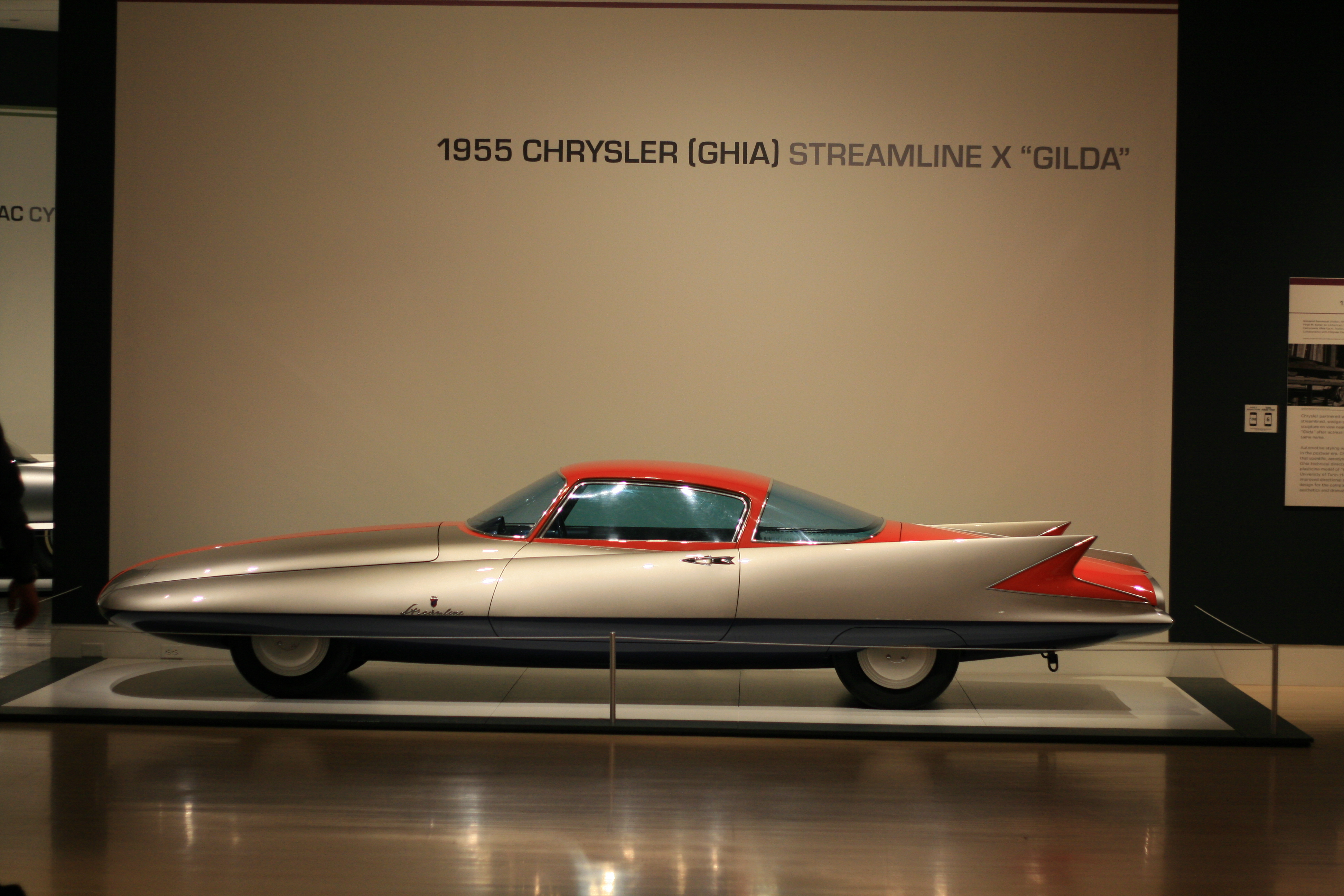
Back in 2015, Bobbi and I went to the Indianapolis Museum of Art (I refuse to call it "Newfields", no matter what the current signage reads) to see the touring "Dream Cars" exhibit.

I brought along a few cameras. Two were SLRs, a Canon EOS 10S, wearing an EF 35-135mm f/3.5-4.5 zoom lens and loaded with Ilford Delta 3200, and the other was an EOS Rebel XTi wearing the EF 50mm f/1.8 "Nifty Fifty". There was also the Nikon Coolpix P7000 I carried in my pocket all the time.

Thing was, I still had a lot to learn (and also re-learn) about photography. For instance, all my SLR experience before I bought the Rebel had been back in the film days, so I didn't know anything about crop factor. I slapped the 50mm on there because of the fast aperture, but the APS-C sensor on the Rebel made it effectively an 80mm lens. It was unstabilized, the fairly primitive sensor in the XTi struggled in low light, and I had way too long of a lens for shooting in the tight indoor quarters of a museum.


Meanwhile, even with the high speed B&W Ilford film in the EOS 10S, the unstabilized kit lens really struggled with the lighting.


The only camera that I got any really decent results with was the Coolpix, which had a fast, stabilized zoom lens, and which I put in Program mode at ISO 400 and just let 'er rip.


Not only was the gear primitive and my lens choices questionable, but I was shooting SOOC jpegs and my metering bag of tricks had, like, only two tricks in it.

Given what I had available at the time, I'd have been better off with the unstabilized 50mm on the film camera and just going with the stabilized EF-S 18-135mm travel zoom on the Rebel.

I would love to go back in time with my Fuji X-T2 or Nikon D800...

3.17.2024

DSLR Pics: 1952 Chevy truck with the Canon EOS-1D Mark III


This photo was shot with the handy EF 24-105mm f/4L IS general purpose zoom lens mounted on the Canon EOS-1D Mark III.

It was shot in RAW and processed through Adobe Photoshop's RAW converter using the "B&W with red filter" setting.

Like I usually do, I have the 1D Mk3 set up to record both a RAW file and a high res monochrome JPEG. Even though I (almost) never use the straight-out-of-camera JPEG, this ensures that the image shown on the back of the camera is in monochrome and helps me keep my head in that B&W mode, looking for light, shadow, and texture rather than colors.

.

3.12.2024

DSLR Pics: Holden with the Canon EOS-1D Mark IV


It was a gorgeous day on Sunday, sunny but cool, and I figured it would be a primo day to get some squirrel photos on the way to and from lunch.

So I grabbed the EOS-1D Mark IV and EF 70-200mm f/4L IS combo, which is pretty much my favorite squirrel-spotting rig. On the way out the door I noticed Holden lounging in his perch atop the cat tree in the living room, which puts him at roughly eye-level. The bright March sunlight filtering through the drapes made the shot irresistible, so I put the camera in Aperture priority mode, opened the lens wide, bumped the ISO to 3200 and (with help from Bobbi to get the lad to look around some) started snapping.

The bottom photo is processed from the RAW and the top is a SOOC monochrome JPEG. 


On the way to lunch I didn't see many squirrels. I guess when you're arboreal you don't venture out of your drey much when the branches are waving in a 10-15mph breeze.

I did, however, see this Eastern cottontail doe...


3.01.2024

High ISO

Canon EOS-1D MkIII & 24-105mm f/4L IS, ISO 3200

While the Nikon D1X could go up to ISO 800 and the Canon EOS-1Ds Mark II went all the way to 1600, I was leery of using either one at more than ISO 400 for fear of unusable amounts of noise.

It wasn't until 2007, with the release of the Canon EOS-1D Mark III and the Nikon D3 that 1600 and 3200 became practical settings, at least in my opinion.

This seems impossibly quaint here in 2024, when I'm seeing friends posting images from Canon R6's and Nikon Z7 II's at five-digit ISOs with no really noticeable noise, but it was a big deal back then.

Nikon D3 & 24-120mm f/4G VR, ISO 1600


2.29.2024

Canon EOS-1D Mk III: The Need for Speed

One of the problems with early DSLRs, especially when shooting in RAW, was the time it took to record image files to the storage device.

Back in 2001, the Nikon high-res D1X pro body would shoot at 3 frames per second, but it filled the buffer with only six RAW (or NEF, in Nikon-speak) frames. A couple years later, the consumer-grade Canon EOS Digital Rebel could nearly equal that frame rate at 2.5 FPS, although it filled its buffer in only four shots and then required a full "five Mississippi" count until the buffer was cleared.

The big revolutionary breakthrough was the Canon EOS-1D Mark III. Released in 2007, it came with a pair of Canon's DIGIC III image processing chips (as opposed to the lone chip found on lesser Canons) and these worked in parallel to allow not only a blistering 10 frames per second max speed, but it took a full thirty RAW files before the buffer finally tapped out and needed time to catch up. If you just wanted to shoot JPEGs, you could hold the shutter button down for a full eleven seconds before the buffer needed a breather. This was a 20% increase in frame rate and a 50% increase in buffer capacity relative to the 1D Mark II it replaced.

The sound of a mirror and shutter working at ten frames a second is noticeable. It was pushing the limits for the DSLR at the time and wasn't appreciably surpassed until the 14FPS EOS-1D X of 2011.


2.17.2024

DSLR Pics: Neighborhood people with the Canon EOS-1D Mark III


The main reason I walk around with the EF 70-200mm f/4L IS on my EOS-1D Mark III is that, with an effective focal length bump to 260mm from the APS-H sensor, it's a decent lens for neighborhood squirrels and birds.

It wasn't until recently that I thought "Y'know, if the 24-105/4L IS can be pressed into service as an improvised portrait lens, why not the 70-200/4L IS? They have the same maximum aperture and they're both stabilized..."

So when I walked into Fat Dan's for lunch the other day, I bumped the ISO on the 1D3 up to 1600 and asked some folks if I could take their portraits.


I think it worked out okay, actually. There's a little bit of noise at ISO 1600 from the old 10MP sensor, but when you're shooting monochrome, that's no biggie.


2.15.2024

DSLR Pics: Neighborhood people with the Canon EOS-1D Mark IV


Although it's not marketed that way, Canon's EF 24-105mm f/4L IS zoom lens is not terrible for portraits.

Especially on the older pro bodies with the APS-H sensors, the 1.3X crop factor means your effective focal length range of 31-136mm encloses the trinity of standard portrait focal lengths: 85mm, 105mm, and 135mm. (Here's me lamenting again that Canon abandoned the APS-H sensor size with the launch of the EOS-1D X.)

While f/4 isn't a screamingly fast aperture, it's big enough to get a reasonable amount of subject separation from the background. You're not going to blow the surroundings out in a creamy blur of bokeh, but at the same time you won't be worrying as much about not having enough depth of field to get both eyes in focus, either, so there's that.


1.19.2024

DSLR Pics: Local wildlife with the Canon EOS-1D Mark III


The 1.3x crop factor of the APS-H sensor in the 1D Mk III turns my EF 70-200mm f/4L IS lens into an effective 91-260mm telephoto zoom. It's not super-long, but it's reasonably effective for urban wildlife.

If the weather were only slightly more clement, I'd have put it on the 7D for an even bigger focal length bump. It was quite frigid out, though, despite the unusually sunny winter skies.


1.14.2024

Icy Road Truckin'

The weather here in Broad Ripple was bitter cold yesterday. There was only a dusting of snow on the ground, but the air temperature was in the mid-teens and not looking to get any warmer when I snapped this photo on the way to lunch.

Canon EOS-1D Mark IV & EF 24-105mm f/4L IS

Canon rates the EOS-1D Mark IV to function from 32°F to 113°F, but this is conservative and likely has a hefty bit of ass-covering safety margin built in.

The single-digit pro bodies from Canon and Nikon are expected to function in the harshest environments where photos must be taken. National Geographic photographers in the Himalayas and Sports Illustrated shooters on the sidelines of January NFL playoff games can't just go "Well, it's cold. Guess I won't take any pictures today."

Are there cameras I won't expose to this kind of weather? Sure. The lenses of the Nikon 1 series of mirrorless cameras, for example, have very fragile aperture diaphragms. Since they're essentially unrepairable at this point, I certainly don't expose them to sub-freezing temperatures, lest I brick them.

I'm wary of exposing older point & shoot cameras that I use for fun to extreme temps as well. I may not have a lot of money sunk in them, but why take chances?

I have several old vintage professional bodies: the Nikon D1X, D2X, and D3, the Canon EOS-1Ds Mark II, 1D Mark III, and 1D Mark IV, as well as the Olympus E3 and E5, all of which are the rugged, photojournalist-grade bodies from their respective manufacturers. I know it's silly to anthropomorphize gear, but I like to think that they relish getting out in awful weather because it reminds them of their working days.

.

12.27.2023

DSLR Pics: Huck the cat with the Canon EOS 40D


With the 1.6X crop factor of Canon's APS-C sensor, the EF 50mm f/1.4 lens is transformed from a normal lens into a short telephoto, ideal for portraiture work. It's fast enough for available light work indoors, even on the old EOS 40D!


12.07.2023

My first print sale!

Someone in the neighborhood saw I'd taken a picture of her boyfriend's truck and commissioned an 8x12" print to give him for his birthday. That was my first print sale!

1929 Model A pickup roadster, snapped with a Canon EOS-1D Mark IV & EF 24-105mm f/4L IS

I've had photos in magazines and books before...even on the cover of a book...but selling a physical print still felt like a really big deal. I had no idea what to charge. I had to contact a photographer friend and ask him.

I'm a real photographer now!


11.18.2023

Vintage DSLR Pics: Kit Cars with the Canon EOS-1D Mark III


Here are a pseudo Bugatti Type 37 and a faux MG TD tooling around the 'hood. Both are Beetle-powered, although the Bugatti is a much more extensive alteration of the original VeeDub.


Both were photographed with a 2007-vintage Canon EOS-1D Mark III & EF 24-105mm f/4L IS zoom lens.

.

11.15.2023

Vintage DSLR Pics: Motorcycle Action with the Canon EOS-1D Mark IV

The EOS-1D Mark IV, launched in autumn of 2009, was Canon's last pro DSLR to use the APS-H size sensor. This sensor was slightly smaller than a full-frame 35mm negative, giving a 1.3X crop factor, and was intended to offer higher frame rates for sports shooting.

The early Canon pro bodies came in pairs. The original EOS-1D had a 4MP APS-H sensor and could shoot at 8 frames a second until the buffer filled, while the EOS-1Ds had an 11MP sensor the same size as a 35mm negative, but could only manage about 3fps and filled the buffer much faster with its enormous image files.

So the larger sensor cameras were marketed for studio and landscape work while the higher frame rate APS-H bodies were aimed at photojournalists as well as wildlife and sports photogs. The 1D Mark IV, for instance, started shipping a couple months before the 2010 Winter Olympics in Vancouver and the timing was not a coincidence.

While the 1D Mark IV was the apex predator of the Canon lineup when it was new, sporting a $5000 price tag to match, used ones these days are obviously much cheaper, available for as little as $400 from KEH. The samples to look for, though, are the extremely good condition ones with low shutter counts. 

A friend calls those "Doctor Cameras", referring to the well-heeled enthusiast photographers who buy the top-of-the-line pro gear, designed and engineered to give years of hard use and hundreds of thousands of shutter actuations, and then use it very little before flitting off to the next Ultimate Camera. Those buyers are a boon to us Poors who like to play with high end gear, as they inevitably clean out their camera closets every few years and sell the stuff to resellers like Roberts, MPB, or the aforementioned KEH.

It's kind of ironic to use a high-speed sports camera to take pictures of motorcycles from my usual perch at 54th & College in SoBro. It's not really a spot for action photography, being a flat four-way intersection in the middle of a city...but sometimes I get lucky!

These were all shot with the 1D Mark IV and Canon's EF 24-105mm f/4L IS lens.


11.07.2023

Vintage DSLR Pics: Puppers and Doggos with the Canon EOS 40D


In the beer garden behind Half Liter on Sunday afternoon were plenty of good doggos.

Fortunately I had the Canon EOS 40D and EF 24-105mm f/4L IS along with me that day! Thanks to the 1.6X crop factor of the 40D's APS-C sensor, the lens acts like a 38-168mm lens, which gave plenty of reach for pupper portraiture.