4.30.2025

Mirrorless Pics: Around downtown Indy with the Olympus PEN E-P5


These were all snapped with an Olympus PEN E-P5 wearing Panasonic's little 20mm f/1.7 pancake standard prime lens.

4.29.2025

Lenses I Live By: The Short Portrait

Portrait lenses tend to be longer than standard primes, since this allows taking photos without having to be all up in the subject’s grille, as well as exaggerating the effects of focal length compression to not cause the subject’s features to look distorted.

The “short” portrait focal length range, in my own personal lexicon, runs from about 75mm to 105mm, in full-frame terms. (I use “full-frame terms” because the 35mm format spent something like fifty years establishing itself as the lingua franca of normie photography jargon.) 

Most of the camera systems I use have a lens that falls into this category. For instance, the Nikon 1 system, with its little 1" CX-format sensor, has the 1 Nikkor 32mm f/1.2, which has the equivalent focal length of 87mm.

Nikon 1 V2 & 1 Nikkor 32mm f/1.2

Moving up to Micro Four Thirds, there are some pretty slick choices. Panasonic goes with 42.5mm focal lengths, which is an 85mm equivalent, in an inexpensive f/1.7 version and a bucks-up Leica Nocticron-branded f/1.2. Olympus, on the other hand, favors the 90mm equivalent 45mm focal length. They, too, offer a spendy f/1.2 PRO lens, but the M. Zuiko Digital 45mm f/1.8 is so compact, light, and inexpensive that it's the one I choose.

Things are similar with the Fujifilm X-mount ecosystem. There's a honking big 56mm f/1.2 portrait lens, but again, the bargain is the XF 50mm R WR "Fujicron", for its compact size and value pricing.

Fujifilm X-T2 & XF 50mm f/2 R WR

For my full-frame Canon DSLRs, I count on the EF 85mm f/1.8 for this task.

Canon EOS 5DS & EF 85mm f/1.8


4.28.2025

DSLR Pics: Sports Cars with the Olympus E-510


The 10MP Olympus E-510 was the immediate successor to the E-500 as Olympus's midrange Four Thirds DSLR. It replaced the eight megapixel Kodak CCD sensor of the earlier model with a ten megapixel Panasonic Live MOS sensor, and was the first Oly DSLR to offer Live View as well as in-body image stabilization.


It's a compact little camera, roughly comparable to a Canon Rebel XTi; a little wider, a little shorter, and an ounce lighter. The difference comes in the lenses, since even a high performance zoom like the Zuiko Digital 12-60mm f/2.8-4 is about the same size as an 18-135mm EF-S travel zoom for the crop sensor canons.


4.18.2025

First pics with the Leica Digilux Zoom...

So, I've got a Fuji-branded 32MB SmartMedia card in the Digilux Zoom. With image quality set to "Fine", which is 1280x1024 pixels, that gives me 46 images worth of capacity.

While that resolution is comically low by today's standards (your typical 24MP camera is more like 6000x4000), remember that in 1999 most folks were still looking at images on 1024x768 pixel CRT monitors and those photos were being transmitted via dialup modems as often as not. A 760k image file was big.

I have white balance set to auto. 


The Leica's ISO is fixed at the native 125; even in Manual mode you can't change it. Indoors shots obviously require flash.


The screen washes out in sunlight. Fortunately it also has a tunnel-type optic viewfinder.


4.16.2025

Badge Engineering


Leica's first attempt at entering the consumer digital market happened in 1998 with the Digilux, a 1.5MP camera that was a re-badged Fuji.

In late 1999 it was replaced with the Digilux Zoom, a similarly reskinned Fujifilm MX-1700 (also known as the Fujifilm FinePix 1700 in the U.S. market.)

The Digilux Zoom boasted a Fujinon 6.6-19.8mm f/3.2-5.0 zoom lens, which combined with the crop factor of the 1/2.3" CCD sensor to give an equivalent focal length range of 38-114mm on a 35mm camera, which is a useful all-in-one zoom length.


While the body was a solid-feeling construct of aluminum and magnesium, the control layout was haphazard and the opposite of ergonomic. 

The camera used SmartMedia cards to store images and had no USB ports, so you'll need a SmartMedia-compatible card reader if you want to download images.

I'll play with this thing a bit and write an actual review.

3.04.2025

DSLR Pics: Squirrels with the Olympus E-5


Sunday was supposed to be good squirrel-spotting weather. Clear and cold, but no wind to speak of (arboreal critters tend to hunker in their drays when the boughs get to whipping around.)

I put the Panasonic Leica D Vario-Elmar 14-150mm F3.5-5.6 Asph superzoom on the Olympus E-5 for my walk around the neighborhood but mostly came up empty handed.

I'm still looking for a lens hood for this thing, but they're unobtainium.


With an equivalent maximum focal length of 300mm on the Oly's Four Thirds sensor, I had plenty of reach for squirrel snapping, but I lacked for subjects.

At fifteen years old, the E-5 is starting to show its age, but if you keep the ISO at 400 or lower, it still does just fine.

3.02.2025

Mirrorless Pics: Squirrels with the Olympus OM-D E-M1X


It's an example of the weird time dilation of 2020 that I can't believe that the Olympus E-M1X is six years old. It was launched in January of 2019 as a dedicated pro body for the Oly Micro Four Thirds line that was heavily specialized for sports and wildlife, leveraging the greatest strength of the MFT format: Enormous focal length lenses in very small packages.


2.28.2025

Lenses I Live By: The Superzoom

They're generally called "superzooms", sometimes "all-in-one" or "vacation" lenses. I call them "zoo lenses" because they cover a wide enough spread of focal lengths to cover any shooting situation at the zoo, whether the critter is big and right in front of you, or small and way off in the back of its enclosure.

They typically have a 7X to 10X focal length range... wait, let me explain something.

Most people see the number followed by an "X" and assume it refers to view magnification, since that's what it signifies with telescopes and microscopes and the like. With cameras, however, it refers to the range of focal lengths.

A 35-70mm zoom lens would be a 2X zoom, going from a wide-ish viewing angle to the very shortest edge of telephoto. A 70-210mm would be a 3X, while a 24-240mm would be a 10X, et cetera.


The 12-200mm on the Olympus E-M1X in the photo above, the equivalent of a 24-400mm lens on a full-frame camera, is at the extreme end of superzoom ranges. It's able to shoot from comfortably wide angles to a very credible long telephoto length suitable for urban wildlife.


One of the first really good superzooms was Nikon's 28-200mm AF-D, which was replaced by the even more compact 28-200mm f/3.5-5.6G in 2003. Now discontinued, those lenses have gotten a little cult-y due to their small size and can fetch a premium on the used market.

Nikon D700, 28-200mm f/3.5-5.6G

The superzoom I get the most use out of is for DX Nikons, though: the 18-200mm f/3.5-5.6 VR II. I've used it on all my crop sensor Nikon DSLR bodies and the only one on which I don't like it is the D7100, as the 24MP sensor reveals its limitations. It's plenty sharp on the older D300S, though.

Nikon D300S, 18-200mm f/3.5-5.6 VR II

Basically, any time you're going someplace where you don't want to carry several lenses and have no idea what you're going to be shooting, the Superzoom is your Swiss Army knife lens. Vacation, the zoo, just walking around the neighborhood, it's your one-lens solution.

Quality ones tend to be moderately spendy, because there's a lot of optical jiggery-pokery happening in there to keep image quality reasonably decent, and they're not so hot for indoors or low light because of their fairly slow aperture range, but they're my go-to solution for a sunny day stroll around Broad Ripple if the squirrels are out and about.

2.27.2025

DSLR Pics: Squirrels with the Nikon D2X


One of the best deals in a high-quality long telephoto zoom for DSLRs is the AF Nikkor Nikon 80-400mm f/4.5-5.6D ED VR. You can find them used at BezosMart for under $400, which is really pretty sweet when you consider that they stickered for close to two grand when they debuted back at the turn of the Millennium.

Why are they so inexpensive? Well, they are an older style autofocus Nikon lens, utilizing a focus motor in the camera body to turn a drive screw in the lens body. This means they won't work as an autofocus lens on any of the inexpensive D3xxx or D5xxx Nikon bodies, or with an FTZ adaptor on a newer Nikon mirrorless. This reduces their demand on the used market.

Plus, it's not a very fast-focusing lens, especially on a prosumer type Nikon body. The big single-digit pro bodies, though, have torquey enough focusing motors to spin this lens reasonably quickly.


This is where the Nikon D2X comes in. The D2 series was Nikon's last pro body to use an APS-C size sensor, what Nikon calls "DX format", with the D2X having a 12MP Sony-manufactured CMOS unit, rather than the proprietary Nikon LBCAST sensor used in the D2H. 

Because they're so old, you can find good deals on them used online. I spotted mine for a couple hundred bucks in the showcase at Roberts.


Because of the 1.5X crop factor of the DX sensor, the 80-200mm lens has an effective focal length bump to the equivalent of 120-600mm, letting you get right up in the grille of Mr. Squirrel.

The effective VR system comes in handy with a lens this big and heavy, allowing you to shoot hand-held at much slower shutter speeds than you'd be able to with a non-stabilized lens. (This is one of those lenses that's big and heavy enough to rate a tripod foot.)

Here's the 80-200 mounted on my old Nikon D1X.

This is a great combo for urban wildlife, if a bit slow for birds-in-flight or sports.

2.17.2025

Galactic Domination

Probably the first computer strategy game to really eat chunks of my time was Empire. Of course, I also liked the building aspects of Sim City. So when I ran across Civilization for the first time, I was hooked.

Civ was the prototypical "4X" turn-based strategy game, where the X's stand for "EXplore, EXpand, EXploit and EXterminate". Trying various strategies was endless entertainment for me.

The one that really got me hooked, though, was Master of Orion, which added the fun of designing the starships for your fleet for maximum micromanaging nerdalicious fun.

How tickled was I to get it loaded and up and running on my clamshell iBook last week?


Pretty darn tickled, let me tell you.

Let me conquer this galaxy and then I'll give you a retro book report!

1.20.2025

Mirrorless Pics: Broad Ripple, Indianapolis with the Hasselblad Lunar


I know it's just a Sony NEX-7 re-skinned in a funky titanium and carbon fiber shell, but I like it. I mostly shoot it with the Sony Zeiss Vario-Tessar T* 16-70mm f/4, although I also have one of the E-mount 16mm f/2.8 pancake wide angles with the Hassy branding on it.


The Lunar was the first camera I ever had with in-camera HDR and I played with that a bit. The menus on Sony mirrorless cameras back then were clunky and awkward and the light re-skinning they got for Hasselblad duty just made them prettier but no less counterintuitive. The controls and menus on the Sony NEX cameras always felt like they were done by someone who got transferred to Sony Camera Division from Clock Radios or Stereo Remotes two weeks ago.


1.08.2025

DSLR Pics: Random shots with the Canon EOS 40D

A liter-sized glass beer mug from Half Liter BBQ in SoBro, Indianapolis.


A happy pooch on the patio of Twenty Tap in SoBro, Indianapolis.


Tulips in SoBro, Indianapolis.


 A Volkswagen New Beetle in the parking lot at the grocery store.

12.12.2024

Mirrorless Pics: Squirrels with the Olympus E-M1X


These were snapped with the Olympus OM-D E-M1X using the M. Zuiko Digital 12-200mm f/3.5-6.3 superzoom. That lens is one of the great things about the Micro Four Thirds format, as it has an equivalent focal length range to a 24-400mm lens on a full frame camera yet is smaller than a soda can.

11.26.2024

Grinding Gear

So, the Shitty Camera Challenge is fixin' to start again, and I figured it would be fun to use the Nikon Coolpix 990 that was so state-of-the-art in 2000 but which definitely falls into the "shitty" category by modern standards.

Mine had been sitting on a shelf in the living room since I last played with it for this blog, back in...wow, it's been three years!

I pulled it down yesterday and the batteries were flatter than the horizon in Amarillo. "No problem," I figure, "I'll just get some fresh AA's out of the kitchen drawer." (I keep a well-stocked battery tray in there.)

I put the new batteries in the camera and turned the power on and...nothing.

Hmmm. Popped the battery compartment open and cleaned the contacts with a pencil eraser. Still nothing.

Blew air under the power switch and proceeded to pivot it back and forth vigorously. Apparently that worked, because the camera powers up now.

Fat Dan's Deli and Twenty Tap


11.16.2024

"...television tuned to a dead channel..."

I stumbled across a neat (and very comprehensive) review of the game Neuromancer, which I have fond memories of playing with a friend at his apartment in Athens, Georgia, back when a 286 with EGA graphics was still a pretty decent gaming rig.

Go and check it out!

.

11.04.2024

Lenses I Live By: 50mm

The basic building block of any lens kit is, or at least used to be, the fast normal prime. In full frame terms, that's generally a 50mm lens with a maximum aperture of f/1.8 or faster. I have something like this for just about every system I use.


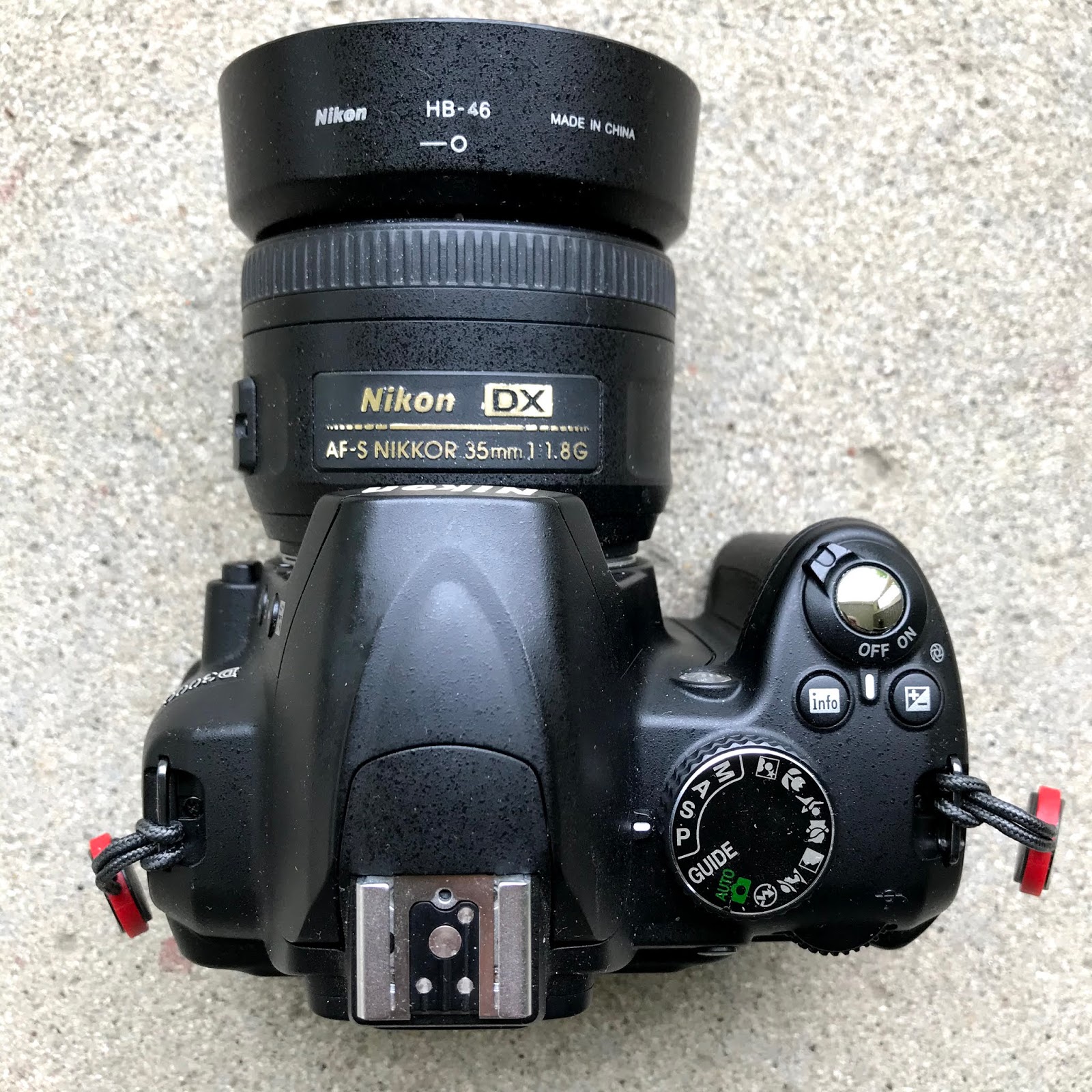
Nikon's excellent little 35mm f/1.8G is a great crop sensor prime, letting you isolate the subject and blue the background nicely.


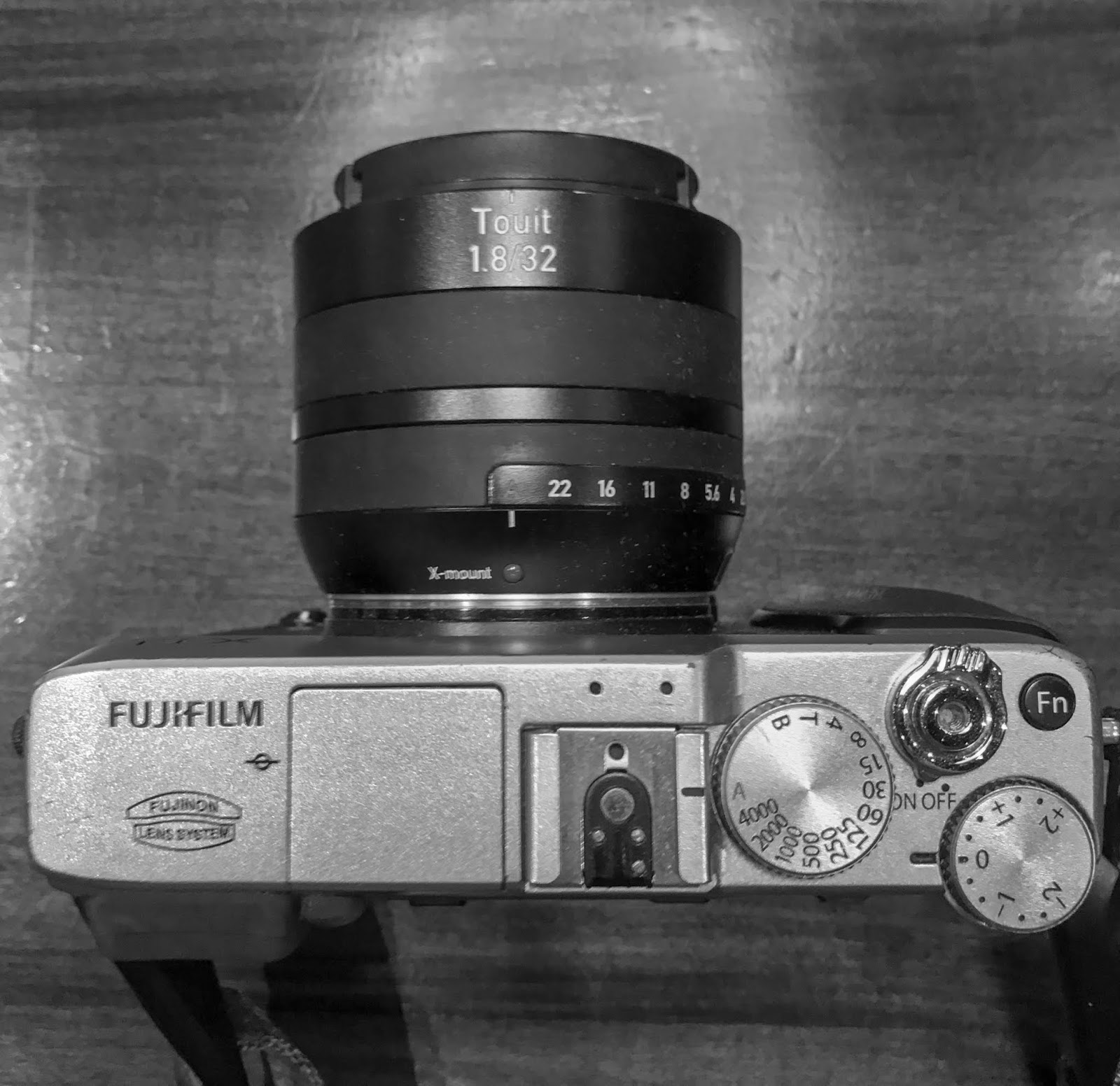
Fuji makes a few 35mm XF primes of varying prices and maximum apertures, but on my Fuji cameras I like the 32mm f/1.8 Zeiss Touit. If you really feel the need for speed on a budget, Sigma offers their 30mm f/1.4 Contemporary prime for the X-mount, too.


The Zeiss makes me happy...


Still, given the versatility of modern zoom lenses, I usually only break out the 50mm equivalent when I need the really fast aperture. They do see more use than my 35mm wide-ish angle primes, though.

It comes in handy with cameras that aren't great in low light, like the small-sensor Pentax Q series, which has an 8.5mm f/1.9 prime that's a 50mm equivalent.