Showing posts with label Coolpix. Show all posts

11.01.2025

Digicam Pics: A VW Beetle with the Nikon Coolpix A


A 35mm equivalent focal length isn't normally my choice for shooting vehicle photos, but when you're driving along on a fine summer day in Indianapolis and spot a pristine vintage VW Beetle and all you have with you is the Nikon Coolpix A, well... needs must when the devil drives, as they say.

11.26.2024

Grinding Gear

So, the Shitty Camera Challenge is fixin' to start again, and I figured it would be fun to use the Nikon Coolpix 990 that was so state-of-the-art in 2000 but which definitely falls into the "shitty" category by modern standards.

Mine had been sitting on a shelf in the living room since I last played with it for this blog, back in...wow, it's been three years!

I pulled it down yesterday and the batteries were flatter than the horizon in Amarillo. "No problem," I figure, "I'll just get some fresh AA's out of the kitchen drawer." (I keep a well-stocked battery tray in there.)

I put the new batteries in the camera and turned the power on and...nothing.

Hmmm. Popped the battery compartment open and cleaned the contacts with a pencil eraser. Still nothing.

Blew air under the power switch and proceeded to pivot it back and forth vigorously. Apparently that worked, because the camera powers up now.

Fat Dan's Deli and Twenty Tap


9.22.2024

Baby Steps

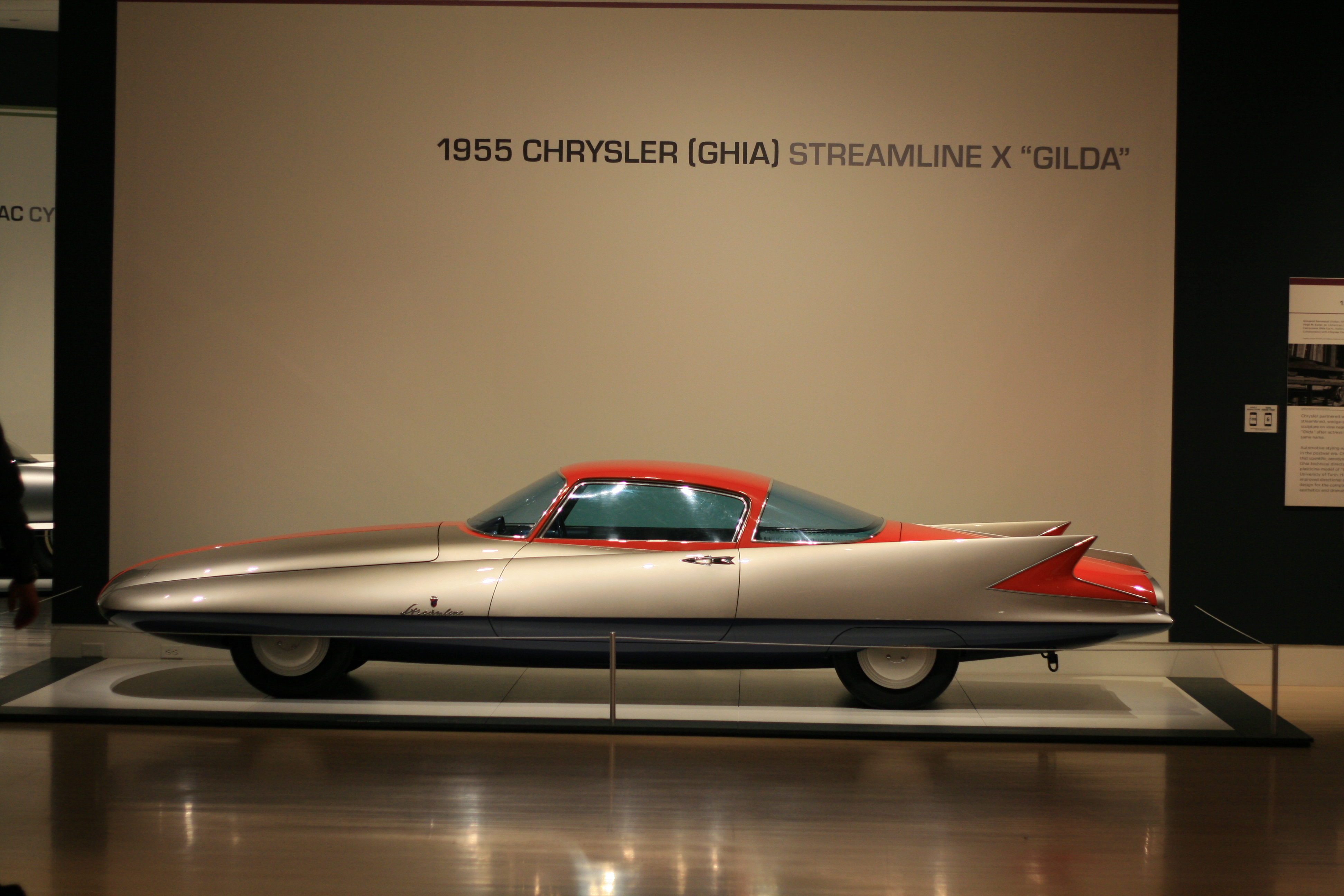
Back in 2015, Bobbi and I went to the Indianapolis Museum of Art (I refuse to call it "Newfields", no matter what the current signage reads) to see the touring "Dream Cars" exhibit.

I brought along a few cameras. Two were SLRs, a Canon EOS 10S, wearing an EF 35-135mm f/3.5-4.5 zoom lens and loaded with Ilford Delta 3200, and the other was an EOS Rebel XTi wearing the EF 50mm f/1.8 "Nifty Fifty". There was also the Nikon Coolpix P7000 I carried in my pocket all the time.

Thing was, I still had a lot to learn (and also re-learn) about photography. For instance, all my SLR experience before I bought the Rebel had been back in the film days, so I didn't know anything about crop factor. I slapped the 50mm on there because of the fast aperture, but the APS-C sensor on the Rebel made it effectively an 80mm lens. It was unstabilized, the fairly primitive sensor in the XTi struggled in low light, and I had way too long of a lens for shooting in the tight indoor quarters of a museum.


Meanwhile, even with the high speed B&W Ilford film in the EOS 10S, the unstabilized kit lens really struggled with the lighting.


The only camera that I got any really decent results with was the Coolpix, which had a fast, stabilized zoom lens, and which I put in Program mode at ISO 400 and just let 'er rip.


Not only was the gear primitive and my lens choices questionable, but I was shooting SOOC jpegs and my metering bag of tricks had, like, only two tricks in it.

Given what I had available at the time, I'd have been better off with the unstabilized 50mm on the film camera and just going with the stabilized EF-S 18-135mm travel zoom on the Rebel.

I would love to go back in time with my Fuji X-T2 or Nikon D800...

1.30.2024

Re-Shoots

I used the Amazon gift card Bobbi gave me for my birthday to order a used Kodak Easyshare V1073.

Now I have a copy of each digicam I used before getting my first DSLR:
  • Sony Mavica FD88
  • Nikon Coolpix 990
  • Kodak Easyshare V1073
  • Canon PowerShot SX500
Now to go back and see if I can reshoot some things I shot back in the day, using the same gear, but do it better! The arrows are the same, but the Indian's gotten a bit better over the years, or at least I'd like to think so.

Alas, I won't be able to re-do the Lucky Gunner Blogger Shoot, or Knob Creek, or classes with Louis Awerbuck and Todd Green, or...

Kodak Easyshare at Knob Creek in 2011


1.23.2024

The Devouring Device

I wrote earlier on this blog about the Sony MYLO, a clever little palmtop internet device that had the misfortune of getting launched about the same time as the iPhone.

The smartphone went on to kill whole categories of portable electronica. Standalone GPS devices? Mostly gone. Handheld games? A shadow of their former selves. Various little digital assistants, like the Palms and Handsprings? Vanished.

And of course, cameras.

An inexpensive little pocket camera like my Nikon Coolpix S6500 is a vanished breed now. Most people are happy with the photographs they can get with their phones.

Now, the S6500 has a true 12X optical zoom, the equivalent of a 300mm telephoto on a full-frame digicam. Walking to lunch the other day, I heard the unmistakeable noise of a squirrel gnawing away at a nut overhead. He was so far up in the tree that it took me a minute to locate him, but the Coolpix had enough reach to get a snapshot...


Thing is, most people don't feel the need to take pictures of squirrels up in trees, at least not enough to carry a separate device, so sic transit gloria digicam...

.

12.19.2023

Digicam Pics: Terlingua, Texas with a Nikon Coolpix 990


In July of 2003 I took a roadtrip with a friend from my home in Knoxville, Tennessee to visit another friend down in Telingua, Texas on his birthday


These photos were all shot with a Nikon Coolpix 990 from the front yard of his house, halfway up a mountainside overlooking Terlingua Creek.


I don't have many digital photos I took before 2008 or so. Most of them are quietly succumbing to bitrot on the hard drive of an old Wintel box in the attic.

.

12.09.2023

Digicam Pics: 1967 Imperial with the Nikon Coolpix A


With its fixed focal length 28mm-equivalent lens, the Nikon Coolpix A isn't my ideal of the perfect choice for car spotting pics, but when this Haze Green 1967 Imperial Crown hardtop sedan rolled past... well, needs must when the devil drives.

The Coolpix A was Nikon's entry in the large sensor compact hipster street photography category, back in 2013. It basically packs the 16MP APS-C sensor from the D7000 DSLR into a shirt-pocket size point & shoot with a crisp, fast Nikkor 18.5mm f/2.8 wide-angle lens. It has the full array of PASM shooting modes, a hot shoe, and the ability to shoot RAW, of course. On the downside, it takes a sec to deploy its lens when initially powered up, and lacks any sort of viewfinder, either optical or electronic. While it stacked up well against the Ricoh GR, the downchecks kept it from really challenging the Fujifilm X100 series, which remain the dominant digicams in that niche.

.

11.14.2023

Digicam Pics: Autumn Colors with the Nikon Coolpix P7000

I've had the little Nikon Coolpix with me as I was walkabout in the neighborhood the last few days. We're past the peak of fall colors, but it's still quite scenic out there.


This house's decor is always on point and changes from month to month: black and white checkered flag motif in May for the 500, rainbows in June for Pride Month, star spangled red white and blue in July, spooky in October, and this harvest motif in November...


11.10.2023

Digicam Pics: Around SoBro with the Nikon Coolpix P7000

Over at Down the Road you'll find a review of Jim Grey's workhorse digicam, the Canon Powershot S95. I can really relate to his enthusiasm for the camera, because it mirrors mine for the Nikon Coolpix P7000. (In fact, the cameras are in such a similar market niche that they were both in a three-way comparison test at DPReview.)

These days, when I almost always have an actual camera on a strap around my neck, the P7000 (it's my second!) doesn't get as much lovin', but I had it out yesterday.


The 6-42.6mm f/2.8-5.6 lens has a field of view equivalent to a 28-200mm zoom on a full-frame camera and a reasonably bright maximum aperture at the wide end.

At 200mm full zoom, the built in vibration reduction in the lens is plenty to offer a nice, crisp view of the SoBrosaurus's noggin, with good surface detail


Check out this mean-looking Audi SQ5 I saw yesterday!


I think I'll carry the P7000 around for a few days and see what it can see...


11.08.2023

Good enough...for what?

I shoot a lot of old digicams for fun, but I also get a lot of actual work done with cameras that are technically obsolete.

Gettin' paid with a D7100 (upper left) and a 40D (lower right) in 2022.

When cameras stopped being light-tight boxes with a strip of photosensitive chemicals on a substrate and became light-sensing computers, they fell victim to Moore's Law.

Through the final decades of the film era, it was entirely conceivable that a working photographer could have used the same camera for decades, if not a whole career. While photojournalism, sports, nature, and that sort of photography naturally gravitated to motor drives, autofocus, and other advances as they matured in the Nineties, there's no reason that someone couldn't have soldiered through their entire career in product photography, landscapes, fine art, et cetera, with the same gear they'd always used.

Meanwhile in the digital era it was not uncommon for people to upgrade every three or four years.

While there has been a massive upgrade in capabilities, at what point is it good enough? And good enough for what? Or who?

I got to thinking about that while reading a recent piece by Thom Hogan:
I've written about "good enough" before, but I realize that I haven't pointed out the real problem with "good enough": it's a time-sensitive, subjective analysis based solely upon how well trained and experienced you are. Moreover, since we're talking about seeing things with our eyes, your eyesight also comes into play.
This is an entirely foreign notion of "good enough" to me.

My flippant and cynical response is "I know it's good enough when I see it in the magazine and the check clears" but that's just being snarky. I mean, if you're comparing lenses, sensors, monitors, et cetera, you need some sort of standards, and sharpness and color reproduction are things that are quantifiable.

On the other hand, this photo isn't super sharp at the corners and people are going to remember who Henri Cartier-Bresson was long after they've forgotten anybody currently blogging or vlogging or social media influencing about photography.

My photos are good enough for me if they convey the image I need them to convey. The camera or lens are practically incidental, so long as they're physically capable of capturing that image.

Huck expresses his opinion of meaningless increments of precision to a Nikon Coolpix P7000


.

11.03.2023

Digicam Pics: Around SoBro with the Nikon Coolpix S6500

Released in January of 2013, the Nikon Coolpix S6500 is right at the cutoff date for what is considered a "fossil" on this blog.

There are only six years separating it from the Panasonic DMC-TZ3 from the earlier post, yet the technological gulf between them feels far more vast than that.

The 2007-vintage Panasonic has a 28-200mm equivalent lens in front of a 7MP CCD sensor, while the 2013 Nikon packs a 25-300mm equivalent lens and a 16MP Backside Illuminated CMOS sensor into a package that is slimmer, lighter, and altogether more pocketable. It also has built-in WiFi & GPS, a host of optional automated portrait features to remove dark circles under eyes, add color to cheeks, and even whiten teeth.

Further, where the Panasonic had a $330 MSRP, suggested retail on the Nikon was only $220, and I picked up this one as an open box sample at Best Buy in 2014 for only eighty bucks.

This is because by 2013, the pocket camera market had entered freefall following the introduction of smartphones with truly usable cameras. With a Samsung Galaxy SII or an iPhone 4 in their pocket, most folks had their snapshot needs covered. Digital camera sales had peaked in 2010, with CIPA reporting over 120 million cameras sold, while just three years later had plummeted almost by half, to 62.8 million.

Here's the SoBrosaurus at the widest angle:


And here we are zoomed in on just his noggin:


Even at an equivalent focal length of  257mm, the Nikon vibration reduction in the lens works pretty darn good. That's 1/40th of a second at f/6.1, ISO 400.

It's pretty crisp and detailed in Photoshop. Of course, there's no shooting in RAW and no manual modes of any kind. You can futz with the white balance, the ISO, and the metering, but that's about it. There's no driving stick shift with this camera; you have a dizzying array of presets and special effects, but everything's processed to JPEGs right there in the machine.

"Look, Ma! I can shoot in old-timey sepia!"

This is a handy little camera if all you need is a fast 'n' friendly pocketable superzoom. That 300mm lens lets you do things you can't do with a cell phone, and the camera's smaller than a deck of cards, so it's not any real hassle to carry in pocket or purse.

.

.