Both photos are straight-out-of-camera monochrome JPEGs, shot on different days using the Sony a700. The upper one, the 911 Targa 4 GTS, was snapped with the Sony 16-50mm f/2.8, while the lower 911 Turbo Cabrio used the Sony 16-80mm f/3.5-4.5 Carl Zeiss Vario-Sonnar T* zoom lens.
Showing posts with label Zeiss lenses. Show all posts
8.15.2025
8.14.2025
Lenses I Live By: The Fast All-Purpose Zoom
I’ve blogged before in this series about “superzooms”, which a lot of folks call “vacation” lenses because they cover a wide range of focal lengths, from wide-angle to long telephoto, obviating the need to bring an array of different lenses on vacation with you.
Thing is, some of your vacation will likely take place indoors, while visits to the zoo tend to happen on nice days, hence why I call these zooms “zoo lenses”. The other thing is, the focal length range on these lenses… typically 7X to 10X …precludes both really excellent optical results across the entire focal length range, as well as necessitating slower apertures at longer focal lengths, making them less useful indoors or in otherwise questionable lighting conditions.
Alternatively, most manufacturers make zoom lenses with a slightly shorter focal length range, typically a 24-105mm or 24-120mm equivalent, but better optics and faster apertures, usually a constant f/4 across the whole range, or else an f/2.8-4 or something like that.
These are the real “leave it on the camera all the time” champs for me. They’re long enough for most things short of taking pictures of critters at a distance, and, with any sensor from about 2008 onward, capable of shooting indoors at ISO 800-1000 or so, especially with image stabilization of some sort on tap.
The classics of this genre are full frame lenses from the “Big Two”: Canon’s EF 24-105mm f/4L IS and Nikon’s 24-120mm f/4G VR.
On APS-C size sensors, these translate to 16-70mm and 16-80mm focal length ranges and the heavyweight champion here is the Nikon DX 16-80mm f/3.8-4E VR lens, maybe the best F-mount DX glass ever…
Lastly is my go-to for Micro Four Thirds, the Panasonic 12-60mm Leica DG Vario-Elmarit F2.8-4.0 ASPH, which is a 24-120mm equivalent in that format.
Labels:
Canon EF lenses,
Leica,
Nikon DX,
Nikon FX,
Zeiss lenses
6.14.2025
Reduce, Reuse, Recycle: Great Deals Await!
So, for doing a comparison test for the blog... and also because I love playing with different cameras ...I got the Sony a700 and a Sony 16-50mm f/2.8 zoom lens from KEH for $290, combined.
That's a rugged, weather resistant, pro-grade camera and lens for under three bills. Roberts/Used Photo Pro, locally, had a 16-80mm F3.5-4.5 ZA Carl Zeiss Vario-Sonnar T* for a hundred bucks. It was in "Good" condition, basically the equivalent to BGN (bargain) at KEH because the rubber focusing and zoom rings were somewhat faded and there was visible wear on the lens barrel, but it's functionally just fine, and it's premium glass that sold for nearly a grand back when it came out.
Then the other day I saw that Roberts had an 18-200mm f/3.5-6.3 zoom with caps and hood for $89.
Labels:
2007,
APS-C,
digital photography,
DSLR,
Sony,
Zeiss lenses
5.16.2025
Dead Format Bonus
Sony discontinued their A-mount DSLRs (all basically evolved Minoltas) back in 2012, and the A-mount pellicle mirror SLT cameras not too many years after, so that leaves the A-mount an essentially dead letter.
Used prices on fairly high-spec glass are dirt cheap. That 16-50mm f/2.8 in the picture? Less than two hundo. I found a Sony DT 16-80mm F3.5-4.5 ZA Carl Zeiss Vario-Sonnar T*, which listed for nearly thousand bucks new, for barely over a Benjamin used.
Of the cameras in its class at the time (Canon EOS 40D, Nikon D300, Pentax K20D, and Olympus E-3), the Sony a700 was the only one without an LCD panel on the top plate. Interestingly, like the Pentax and Nikons, it also has a focus motor in the body, allowing it to use older autofocus lenses.
The 12MP sensor has enough resolution that you can get away with a bit of cropping, too.
| MGA snapped with the 16-80mm lens. Cropped somewhat. |
Labels:
2008,
APS-C,
digital photography,
DSLR,
Sony,
Zeiss lenses
1.20.2025
Mirrorless Pics: Broad Ripple, Indianapolis with the Hasselblad Lunar
I know it's just a Sony NEX-7 re-skinned in a funky titanium and carbon fiber shell, but I like it. I mostly shoot it with the Sony Zeiss Vario-Tessar T* 16-70mm f/4, although I also have one of the E-mount 16mm f/2.8 pancake wide angles with the Hassy branding on it.
The Lunar was the first camera I ever had with in-camera HDR and I played with that a bit. The menus on Sony mirrorless cameras back then were clunky and awkward and the light re-skinning they got for Hasselblad duty just made them prettier but no less counterintuitive. The controls and menus on the Sony NEX cameras always felt like they were done by someone who got transferred to Sony Camera Division from Clock Radios or Stereo Remotes two weeks ago.
Labels:
2012,
APS-C,
digital photography,
Hasselblad,
MILC,
old digicams,
Sony,
Zeiss lenses
11.04.2024
Lenses I Live By: 50mm
The basic building block of any lens kit is, or at least used to be, the fast normal prime. In full frame terms, that's generally a 50mm lens with a maximum aperture of f/1.8 or faster. I have something like this for just about every system I use.
The Zeiss makes me happy...
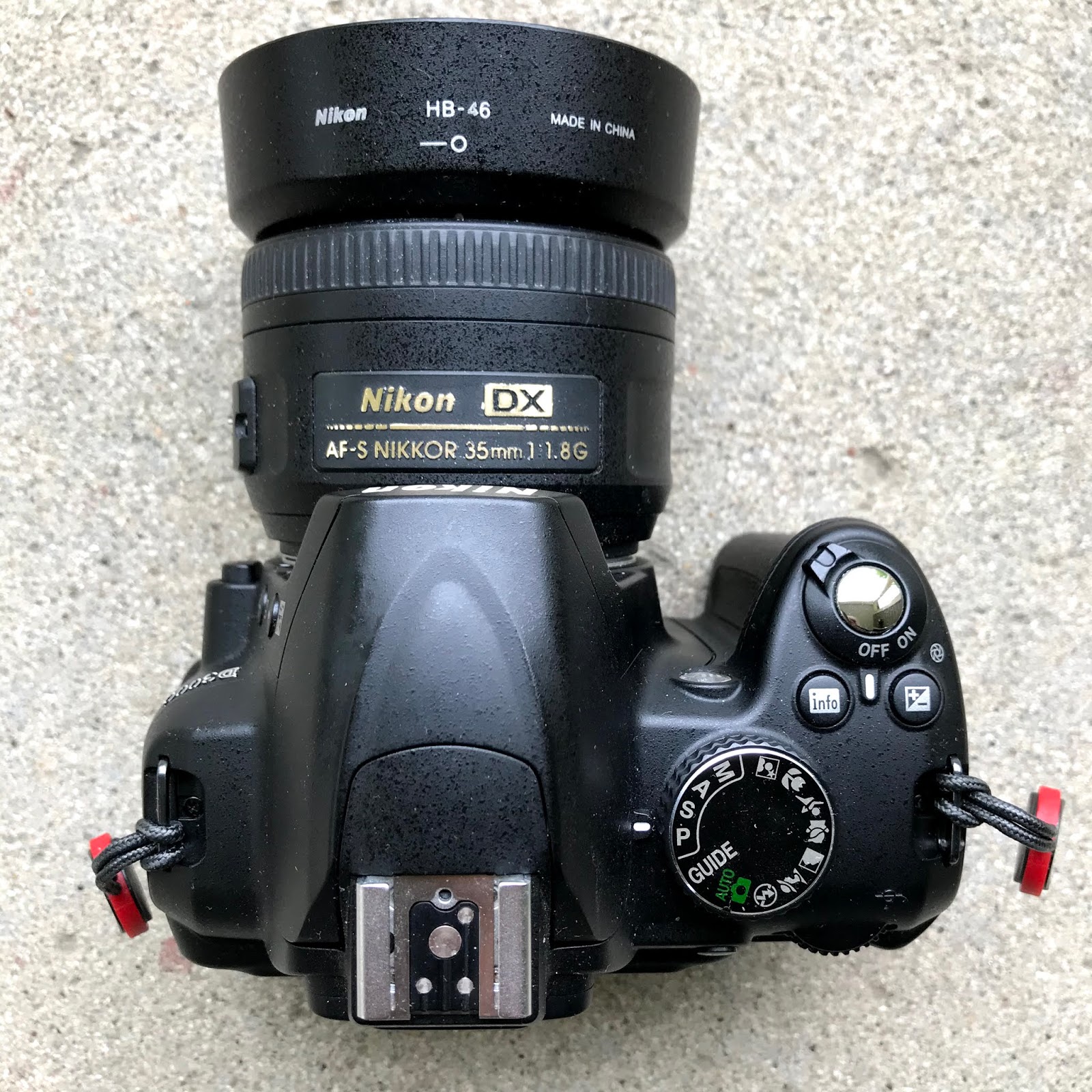
Nikon's excellent little 35mm f/1.8G is a great crop sensor prime, letting you isolate the subject and blue the background nicely.
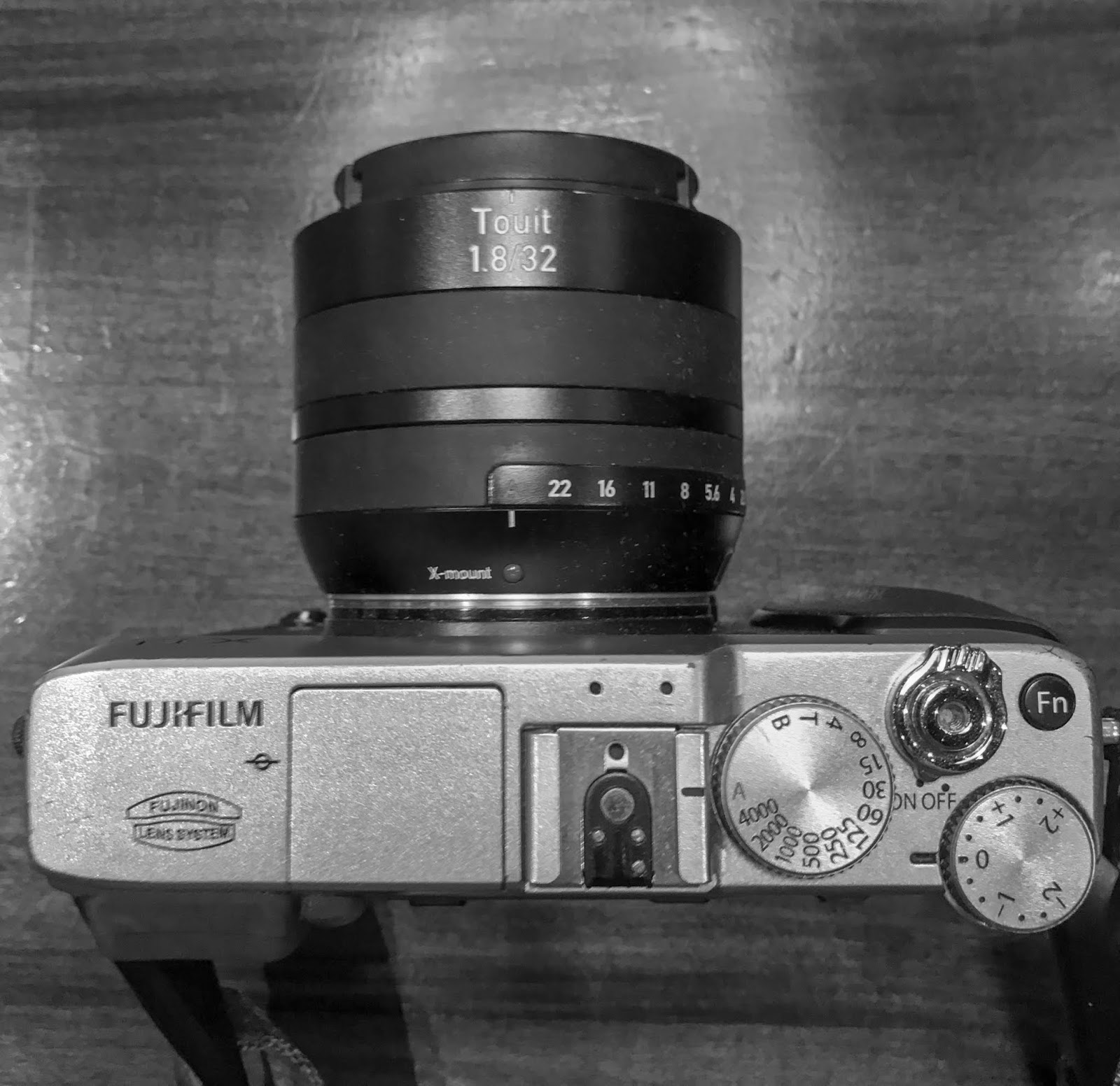
Fuji makes a few 35mm XF primes of varying prices and maximum apertures, but on my Fuji cameras I like the 32mm f/1.8 Zeiss Touit. If you really feel the need for speed on a budget, Sigma offers their 30mm f/1.4 Contemporary prime for the X-mount, too.
Still, given the versatility of modern zoom lenses, I usually only break out the 50mm equivalent when I need the really fast aperture. They do see more use than my 35mm wide-ish angle primes, though.
It comes in handy with cameras that aren't great in low light, like the small-sensor Pentax Q series, which has an 8.5mm f/1.9 prime that's a 50mm equivalent.
Labels:
digital photography,
Fuji,
Fujifilm X-mount,
MILC,
Nikon,
Nikon DX,
old digicams,
Pentax,
Pentax Q,
Zeiss lenses
5.07.2024
Mirrorless Pics: Neighborhood people with the Fuji X-E1
Some shots of the crew at Fat Dan's Chicago-Style Deli at 54th & College, using the Fujifilm X-E1 and the lovely little Zeiss Touit 32mm f/1.8 lens.
Being a roughly 50mm equivalent focal length, it's about as short of a lens as I'll ever use for portraiture, and its fast maximum aperture is good for making the subject stand out against a softly-blurred background. At the same time, f/1.8 and an APS-C size sensor is less likely to wind you up in those "Oops, I only had enough depth of field to get one eye in focus" situations than, say, f/1.4 on a full-frame.
Labels:
2012,
APS-C,
digital photography,
Fuji,
Fujifilm X-mount,
MILC,
old digicams,
Zeiss lenses
3.20.2024
Mirrorless Pics: Neighborhood people with the Fuji X-E1
These are straight-out-of-camera JPEGs from the Fujifilm X-E1 and the wonderful Zeiss Touit 32mm f/1.8. This is one of my favorite combos, pairing a compact rangefinder-style body with a nice, fast standard prime.
Labels:
2012,
APS-C,
digital photography,
Fuji,
Fujifilm X-mount,
MILC,
old digicams,
Zeiss lenses
Subscribe to:
Posts (Atom)