Showing posts with label MILC. Show all posts

9.30.2026

Almost all DSLRs will soon be fossilized...

The cutoff for a piece of consumer electronics to qualify as a "Digital Fossil" on this blog is ten years.

Nikon's newest DSLRs, the D6 and D780, are both six years old now, and its next newest DSLRs, the D850 and D3500, are only a year off from official fossil status. Similarly, Canon's last DSLRs, the EOS-1D X Mark III and Rebel T8i, are also six years old.

Even Pentax, who have steadfastly nailed the flag of their corporate identity to the mast of the SS Moving Mirror, last released a new DSLR in 2022.

Heck, Canon's modern mirrorless age was launched by the EOS R, which turns eight years old in October.


9.01.2026

Size Medium

Back in the early days of DSLRs, when full-frame sensors were rare and very expensive, I'd sometimes hear people refer to full-frame, only half-jokingly, as "digital medium format".

This is both accurate and inaccurate. Accurate in that some of the earliest full-frame DSLRs, the Canon EOS-1Ds series, were used for the sort of shooting that traditionally had been done with medium format film cameras: portraits, landscapes, studio work, that sort of thing.

When the EOS-1Ds Mark II came out in 2004, its 16MP full frame sensor inspired talk about "out-resolving" lenses. (This isn't a thing that happens, for what it's worth. What happens is you now have the resolution to notice flaws that would otherwise pass unseen.)


Inaccurate in that actual digital medium format had been around since nearly the dawn of digital photography, in the form of digital backs for existing medium format film camera systems, but those cost insane amounts of money and were almost never seen outside studios. Further, Mamiya released the first dedicated medium format DSLR in 2004, a 22MP beast with a price tag over ten grand.

It wasn't until Fuji launched their first medium format digital mirrorless camera in late 2017, the GFX 50S, that prices started to get more normal. Oh, sure, they still cost as much as a top-of-the-line pro body from Canon or Nikon, but at least it was used car money, not new car money.

Thing is, they've been on the market long enough now that the oldest ones are nearing Digital Fossils territory. Looking at MPB and Adorama, good used ones are fetching something like $1,500. That's a price where, if someone really wanted to try their hand at digital medium format, the cost is not prohibitive.

I'm kept away by reminding myself that I already have the 50MP Canon EOS 5DS that I hardly ever use.

But that doesn't stop me from kinda wanting to play with one.

2.06.2026

Mirrorless Pics: Neighborhood people with the Fujifilm X-T2


The Fujifilm X-T2, despite being only a few months shy of a decade old, has a modern enough sensor that you don't need a screamingly fast aperture for it to be usable doing available light portraiture indoors.

The XF 16-80mm f/4 R WR OIS is plenty fast enough and has a big enough aperture to give some degree of subject-background separation.


11.08.2025

Mirrorless Pics: Local shots with a Nikon 1 V3


The Nikon 1 V3 was the ultimate iteration of the high-end V-series of the Nikon 1 compact mirrorless cameras. Released in 2014, it was a big improvement in image quality and video capabilities over the V2 and introduced a tilting rear screen to the Nikon 1 series, but had some quirks. 

Unlike the V1 and V2, it did not have a built-in EVF. You could get a detachable EVF that mounted to the hot shoe, but that precluded the use of a flash. Further, it had only a notional grip unless you purchased and attached the separate GR-N1010 grip.

With the EVF and grip attached, it was a bigger camera than the Nikon 1 V2 it replaced. Without them attached, it looks a little silly with the big 1 Nikkor 10-100mm f/4-5.6 VR PD-Zoom lens attached.


10.31.2025

Mirrorless Pics: Squirrels with the Sony a7 II


The Sony ecosystem was my first whack at using full-frame mirrorless for work stuff. I'd used an NEX-5T and an NEX-7 (in Hasselblad Lunar drag) for most of a year and decided to take the full-frame plunge. I dabbled with an a7 for a month and then went all-in on an a7 II.

That experiment lasted about a year before frustration with the tiny NP-FW50 batteries drove me back to Canon DSLRs for work. Even with a battery grip on both the a7 II and the backup a7, I'd have to walk around TacCon or SHOT Show with a pocketful of spare batteries if I wanted to do a whole day's worth of shooting.


9.21.2025

Mirrorless Pics: Vintage BSA with the Canon EOS M6


I really liked the EOS M6, but the system was snakebit from the start with its unique mount and inability to be adapted to full-frame mirrorless, which was obviously the wave of the future once Sony's marketing machine got cranked up.


The panda-colored M6 had good looks, but no EVF and, despite having normal camera-type controls (unlike the original M), it was tough to figure out what kind of camera it was trying to be.


9.16.2025

Soulless?


I’m not really a huge fan of any one camera brand, nor am I really a hater of any. I’ve used and enjoyed all kinds of cameras, made by numerous manufacturers.

I will say that the only one that I’ve felt any antipathy toward is Sony. Don’t get me wrong, they make fine photographic appliances, but so many of them feel like just that: an electronic appliance for making photos. The only Sonys I’ve really bonded with in any way so far are the a700 DSLR, which hardly counts since Minolta did most of the heavy lifting on that one and Sony basically showed up in time to slap their name on it, and the wonderful little RX100 pocket camera.

Other than that, I’ve used Mavicas and CyberShots, NEX mirrorless bodies, as well as using an a7 and an a7 II as my work cameras for most of a year, and just never really warmed to any of them. Their menus and interfaces always feel like they were designed by someone who transferred over from the clock radio or stereo division last week.

I mean, Canons and Panasonics are pretty soulless, too, but not in that way.

You know who knows how to really nail that camera vibe? Fujifilm. They’re probably the best at it these days. Olympus and Pentax, too. They’ve got the whole camera vibe thing figured out. When you’re using one of their camera, you know that there were serious camera nerds involved in the design of the thing.

Of the big two classic Japanese camera makers, Nikon does it way better than Canon, but their attempts at retro ring hollow when compared to Fuji’s.

7.22.2025

Not a Fossil...Yet

Mazda RX-7 Turbo II, Canon EOS R, EF 24-105mm f/4L IS

On the one hand, the Canon EOS R is the second most modern camera I own. Only the Olympus OM-D E-M1X is newer.

On the other hand, the R was Canon's first full-frame mirrorless effort and was released back in October of 2018, which seems a lifetime ago. My rough cutoff for something qualifying as a "fossil" on this blog is being ten years old or more, and the EOS R is heading that way fast.

Still, it's one of the most affordable ways to get into full-frame mirrorless.

4.29.2025

Lenses I Live By: The Short Portrait

Portrait lenses tend to be longer than standard primes, since this allows taking photos without having to be all up in the subject’s grille, as well as exaggerating the effects of focal length compression to not cause the subject’s features to look distorted.

The “short” portrait focal length range, in my own personal lexicon, runs from about 75mm to 105mm, in full-frame terms. (I use “full-frame terms” because the 35mm format spent something like fifty years establishing itself as the lingua franca of normie photography jargon.) 

Most of the camera systems I use have a lens that falls into this category. For instance, the Nikon 1 system, with its little 1" CX-format sensor, has the 1 Nikkor 32mm f/1.2, which has the equivalent focal length of 87mm.

Nikon 1 V2 & 1 Nikkor 32mm f/1.2

Moving up to Micro Four Thirds, there are some pretty slick choices. Panasonic goes with 42.5mm focal lengths, which is an 85mm equivalent, in an inexpensive f/1.7 version and a bucks-up Leica Nocticron-branded f/1.2. Olympus, on the other hand, favors the 90mm equivalent 45mm focal length. They, too, offer a spendy f/1.2 PRO lens, but the M. Zuiko Digital 45mm f/1.8 is so compact, light, and inexpensive that it's the one I choose.

Things are similar with the Fujifilm X-mount ecosystem. There's a honking big 56mm f/1.2 portrait lens, but again, the bargain is the XF 50mm R WR "Fujicron", for its compact size and value pricing.

Fujifilm X-T2 & XF 50mm f/2 R WR

For my full-frame Canon DSLRs, I count on the EF 85mm f/1.8 for this task.

Canon EOS 5DS & EF 85mm f/1.8


3.02.2025

Mirrorless Pics: Squirrels with the Olympus OM-D E-M1X


It's an example of the weird time dilation of 2020 that I can't believe that the Olympus E-M1X is six years old. It was launched in January of 2019 as a dedicated pro body for the Oly Micro Four Thirds line that was heavily specialized for sports and wildlife, leveraging the greatest strength of the MFT format: Enormous focal length lenses in very small packages.


2.28.2025

Lenses I Live By: The Superzoom

They're generally called "superzooms", sometimes "all-in-one" or "vacation" lenses. I call them "zoo lenses" because they cover a wide enough spread of focal lengths to cover any shooting situation at the zoo, whether the critter is big and right in front of you, or small and way off in the back of its enclosure.

They typically have a 7X to 10X focal length range... wait, let me explain something.

Most people see the number followed by an "X" and assume it refers to view magnification, since that's what it signifies with telescopes and microscopes and the like. With cameras, however, it refers to the range of focal lengths.

A 35-70mm zoom lens would be a 2X zoom, going from a wide-ish viewing angle to the very shortest edge of telephoto. A 70-210mm would be a 3X, while a 24-240mm would be a 10X, et cetera.


The 12-200mm on the Olympus E-M1X in the photo above, the equivalent of a 24-400mm lens on a full-frame camera, is at the extreme end of superzoom ranges. It's able to shoot from comfortably wide angles to a very credible long telephoto length suitable for urban wildlife.


One of the first really good superzooms was Nikon's 28-200mm AF-D, which was replaced by the even more compact 28-200mm f/3.5-5.6G in 2003. Now discontinued, those lenses have gotten a little cult-y due to their small size and can fetch a premium on the used market.

Nikon D700, 28-200mm f/3.5-5.6G

The superzoom I get the most use out of is for DX Nikons, though: the 18-200mm f/3.5-5.6 VR II. I've used it on all my crop sensor Nikon DSLR bodies and the only one on which I don't like it is the D7100, as the 24MP sensor reveals its limitations. It's plenty sharp on the older D300S, though.

Nikon D300S, 18-200mm f/3.5-5.6 VR II

Basically, any time you're going someplace where you don't want to carry several lenses and have no idea what you're going to be shooting, the Superzoom is your Swiss Army knife lens. Vacation, the zoo, just walking around the neighborhood, it's your one-lens solution.

Quality ones tend to be moderately spendy, because there's a lot of optical jiggery-pokery happening in there to keep image quality reasonably decent, and they're not so hot for indoors or low light because of their fairly slow aperture range, but they're my go-to solution for a sunny day stroll around Broad Ripple if the squirrels are out and about.

1.20.2025

Mirrorless Pics: Broad Ripple, Indianapolis with the Hasselblad Lunar


I know it's just a Sony NEX-7 re-skinned in a funky titanium and carbon fiber shell, but I like it. I mostly shoot it with the Sony Zeiss Vario-Tessar T* 16-70mm f/4, although I also have one of the E-mount 16mm f/2.8 pancake wide angles with the Hassy branding on it.


The Lunar was the first camera I ever had with in-camera HDR and I played with that a bit. The menus on Sony mirrorless cameras back then were clunky and awkward and the light re-skinning they got for Hasselblad duty just made them prettier but no less counterintuitive. The controls and menus on the Sony NEX cameras always felt like they were done by someone who got transferred to Sony Camera Division from Clock Radios or Stereo Remotes two weeks ago.


12.12.2024

Mirrorless Pics: Squirrels with the Olympus E-M1X


These were snapped with the Olympus OM-D E-M1X using the M. Zuiko Digital 12-200mm f/3.5-6.3 superzoom. That lens is one of the great things about the Micro Four Thirds format, as it has an equivalent focal length range to a 24-400mm lens on a full frame camera yet is smaller than a soda can.

11.04.2024

Lenses I Live By: 50mm

The basic building block of any lens kit is, or at least used to be, the fast normal prime. In full frame terms, that's generally a 50mm lens with a maximum aperture of f/1.8 or faster. I have something like this for just about every system I use.


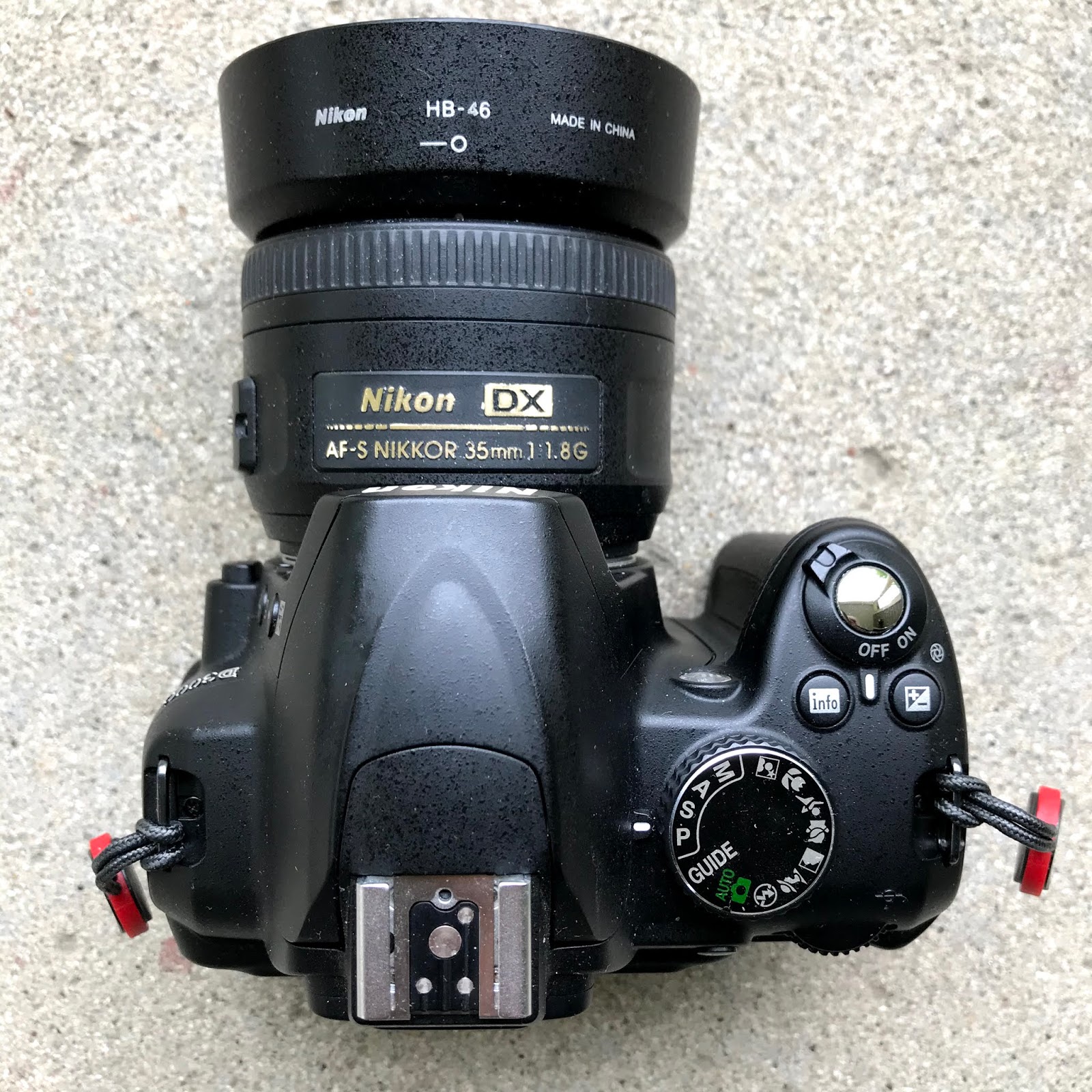
Nikon's excellent little 35mm f/1.8G is a great crop sensor prime, letting you isolate the subject and blue the background nicely.


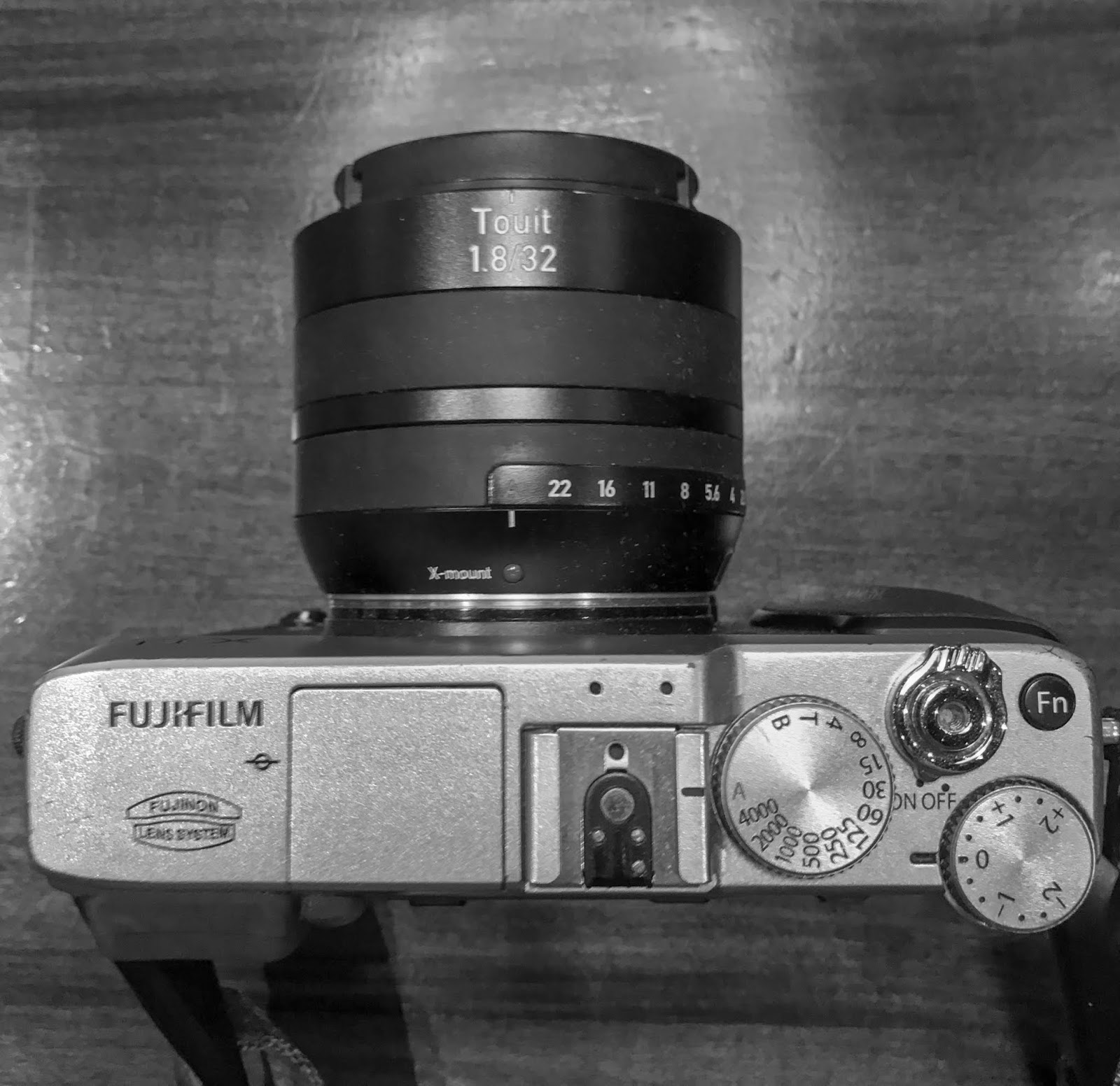
Fuji makes a few 35mm XF primes of varying prices and maximum apertures, but on my Fuji cameras I like the 32mm f/1.8 Zeiss Touit. If you really feel the need for speed on a budget, Sigma offers their 30mm f/1.4 Contemporary prime for the X-mount, too.


The Zeiss makes me happy...


Still, given the versatility of modern zoom lenses, I usually only break out the 50mm equivalent when I need the really fast aperture. They do see more use than my 35mm wide-ish angle primes, though.

It comes in handy with cameras that aren't great in low light, like the small-sensor Pentax Q series, which has an 8.5mm f/1.9 prime that's a 50mm equivalent.


10.15.2024

Lenses I Live By: 35mm


I'm not a wide-angle shooter by nature. I rarely use the wide end of zoom lenses, so wide primes are not a thing I typically have in my kit.

The widest prime lens I use with any regularity is the Fujifilm XF 23mm f/2 R WR. With a field of view equivalent to a 35mm lens on a full-frame body, the compact little "Fujicron" is fast, sharp, and (like it says on the label) weather resistant.

When I'm shooting with longer glass on my Fujifilm X-T2, I'll bring the XF 23mm f/2 along, mounted on my X-E1, to handle wide interiors, streetscapes, and other similar chores.

Plus, I really love the way it looks with that retro vented hood. I keep telling myself that I'll be an ace street photographer with this setup someday... someday. First I'll have to overcome my reluctance to get up in people's grilles with such a relatively wide lens, though.